8-K
0001374690false00013746902026-06-292026-06-29
UNITED STATES
SECURITIES AND EXCHANGE COMMISSION
WASHINGTON, D.C. 20549
FORM 8-K
CURRENT REPORT
Pursuant to Section 13 or 15(d) of the Securities Exchange Act of 1934
|
Date of Report (Date of earliest event reported): June 29, 2026 |
Larimar Therapeutics, Inc.
(Exact name of Registrant as Specified in Its Charter)
|
|
|
|
|
Delaware |
001-36510 |
20-3857670 |
(State or Other Jurisdiction
of Incorporation) |
(Commission File Number) |
(IRS Employer
Identification No.) |
|
|
|
|
|
Three Bala Plaza East |
|
Bala Cynwyd, Pennsylvania |
|
19004 |
(Address of Principal Executive Offices) |
|
(Zip Code) |
|
Registrant’s Telephone Number, Including Area Code: (844) 511-9056 |
(Former Name or Former Address, if Changed Since Last Report)
Check the appropriate box below if the Form 8-K filing is intended to simultaneously satisfy the filing obligation of the registrant under any of the following provisions:
☐Written communications pursuant to Rule 425 under the Securities Act (17 CFR 230.425)
☐Soliciting material pursuant to Rule 14a-12 under the Exchange Act (17 CFR 240.14a-12)
☐Pre-commencement communications pursuant to Rule 14d-2(b) under the Exchange Act (17 CFR 240.14d-2(b))
☐Pre-commencement communications pursuant to Rule 13e-4(c) under the Exchange Act (17 CFR 240.13e-4(c))
Securities registered pursuant to Section 12(b) of the Act:
|
|
|
|
|
Title of each class
|
|
Trading
Symbol(s) |
|
Name of each exchange on which registered
|
Common Stock, par value $0.001 per share |
|
LRMR |
|
Nasdaq Global Market |
Indicate by check mark whether the registrant is an emerging growth company as defined in Rule 405 of the Securities Act of 1933 (§ 230.405 of this chapter) or Rule 12b-2 of the Securities Exchange Act of 1934 (§ 240.12b-2 of this chapter).
Emerging growth company ☐
If an emerging growth company, indicate by check mark if the registrant has elected not to use the extended transition period for complying with any new or revised financial accounting standards provided pursuant to Section 13(a) of the Exchange Act. ☐
Item 8.01 Other Events.
Press Release
On June 29, 2026, Larimar Therapeutics, Inc. (the “Company”) issued a press release announcing (i) that it has submitted the first module of the Company’s rolling Biologics License Application submission to the Food and Drug Administration for accelerated approval of nomlabofusp and (ii) positive data from the Company’s ongoing long-term open label study evaluating daily subcutaneous injections of nomlabofusp in adolescent and adult patients with Friedreich’s ataxia. A copy of the press release is attached as Exhibit 99.1 to this Current Report on Form 8-K and is incorporated herein by reference.
Investor Presentation
On June 29, 2026, the Company will host a conference call to discuss a regulatory update and use a slide presentation in conjunction with the call. A copy of the presentation is filed herewith as Exhibit 99.2, and incorporated herein by reference.
Item 9.01 Financial Statements and Exhibits.
(d) Exhibits
Below is a list of exhibits included with this Current Report on Form 8-K.
* Filed herewith
SIGNATURES
Pursuant to the requirements of the Securities Exchange Act of 1934, the registrant has duly caused this report to be signed on its behalf by the undersigned hereunto duly authorized.
|
|
|
|
|
|
|
Larimar Therapeutics, Inc. |
|
|
|
|
Date: |
June 29, 2026 |
By: |
/s/ Carole S. Ben-Maimon, M.D. |
|
|
|
Name: Carole S. Ben-Maimon, M.D.
Title: President and Chief Executive Officer |
EX-99.1

Larimar Therapeutics Reports Positive Open Label Data and Submission of First Module of Rolling BLA for Accelerated Approval of Nomlabofusp for Friedreich’s Ataxia
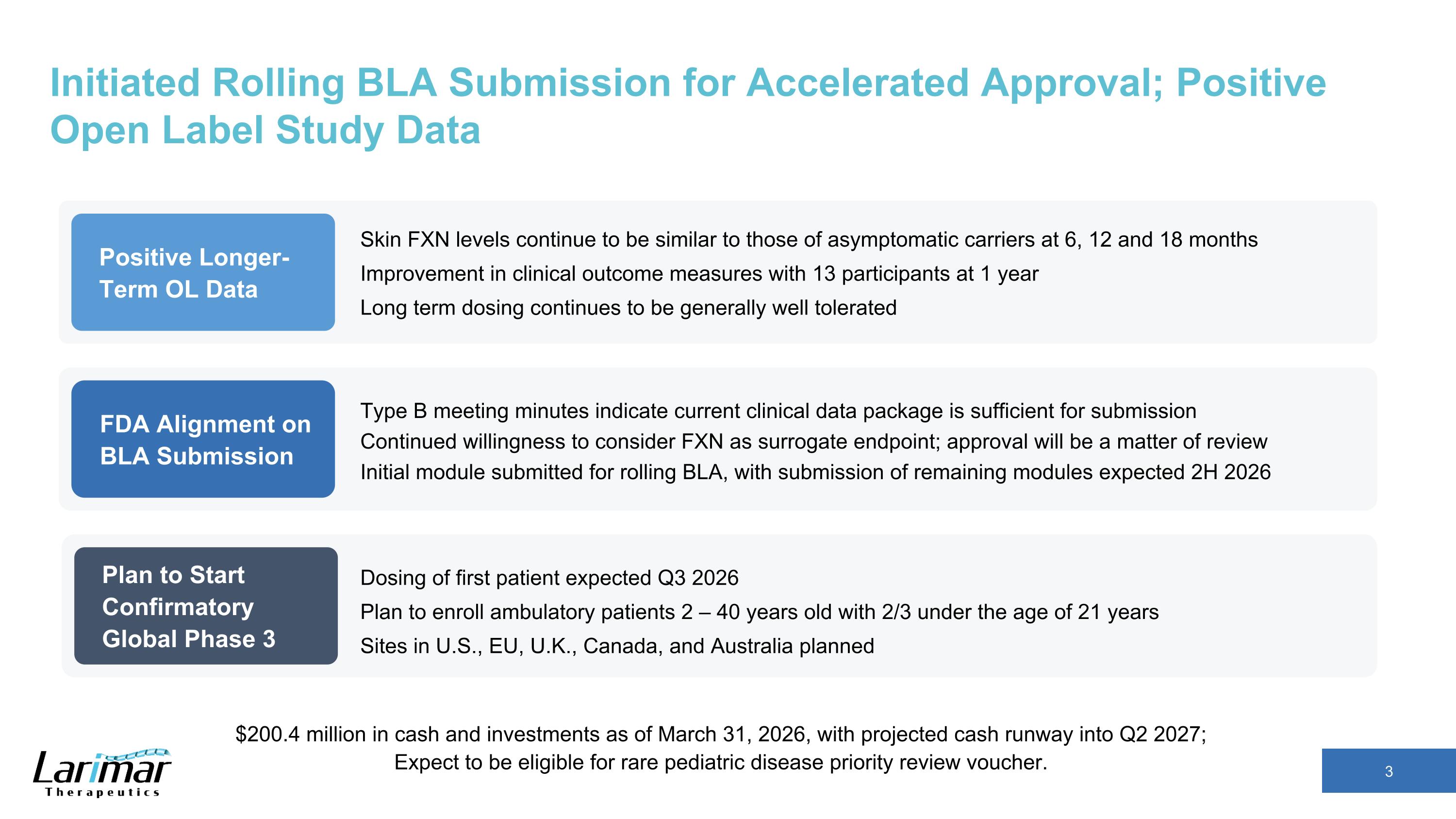
•FDA alignment on submission of BLA data package in multi-disciplinary Type B pre-BLA meeting minutes; first module of rolling BLA submitted with remaining modules expected 2H 2026
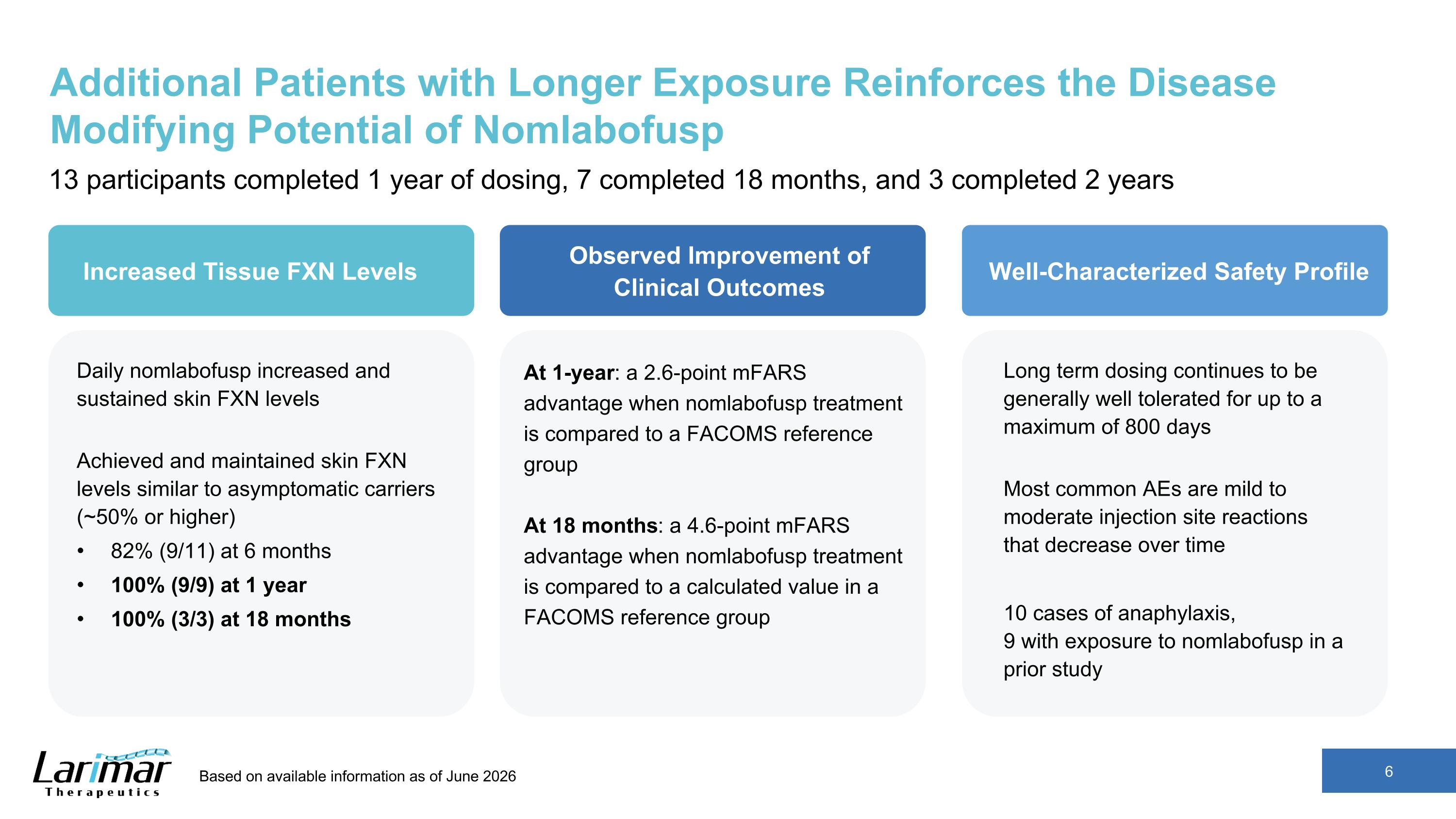
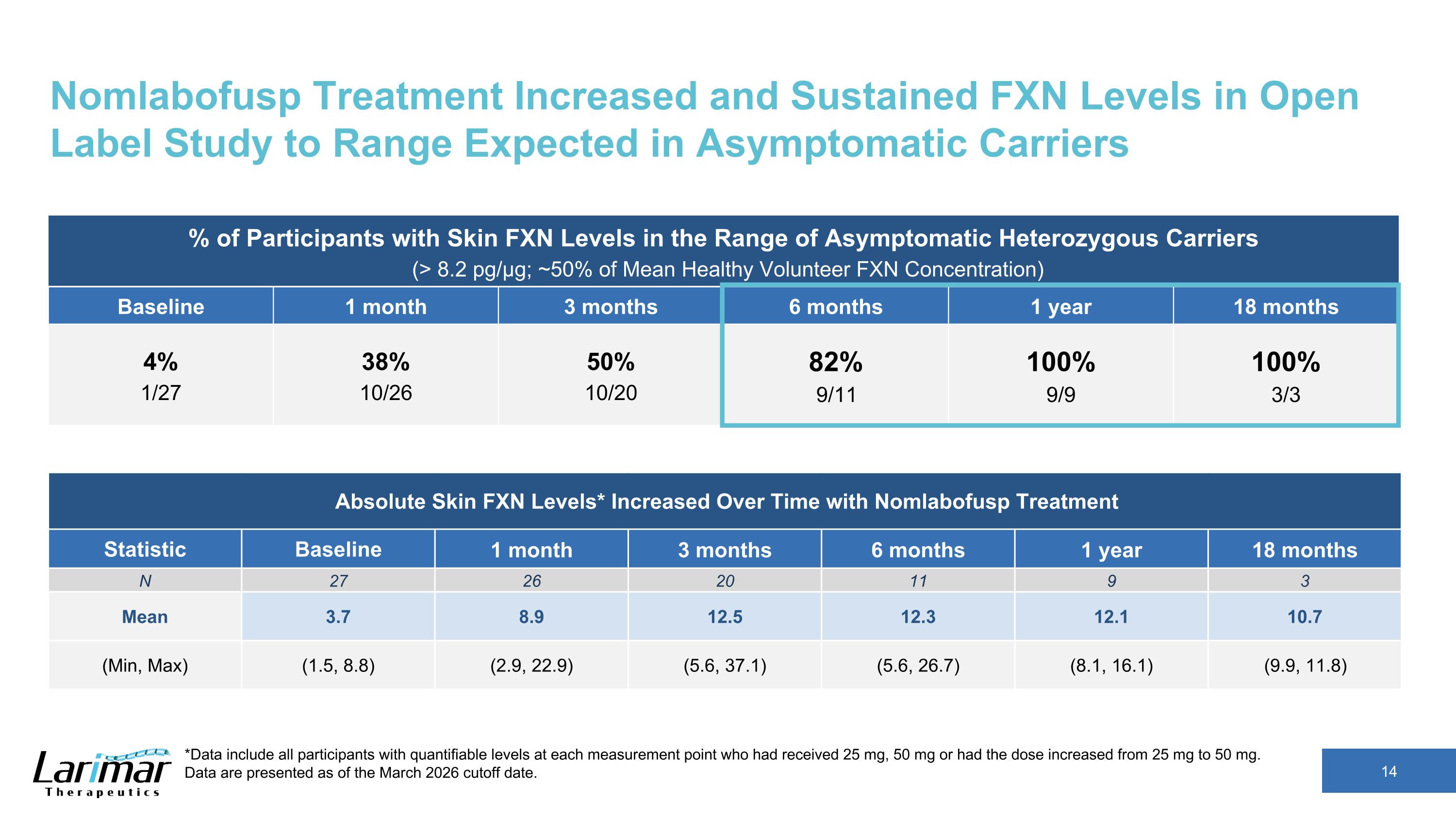
•Daily nomlabofusp increased and sustained skin FXN levels at 1 year and 18 months; 100% (9/9) of participants achieved and maintained levels over 50% of mean levels in healthy volunteers (comparable to asymptomatic heterozygous carriers) at 1-year
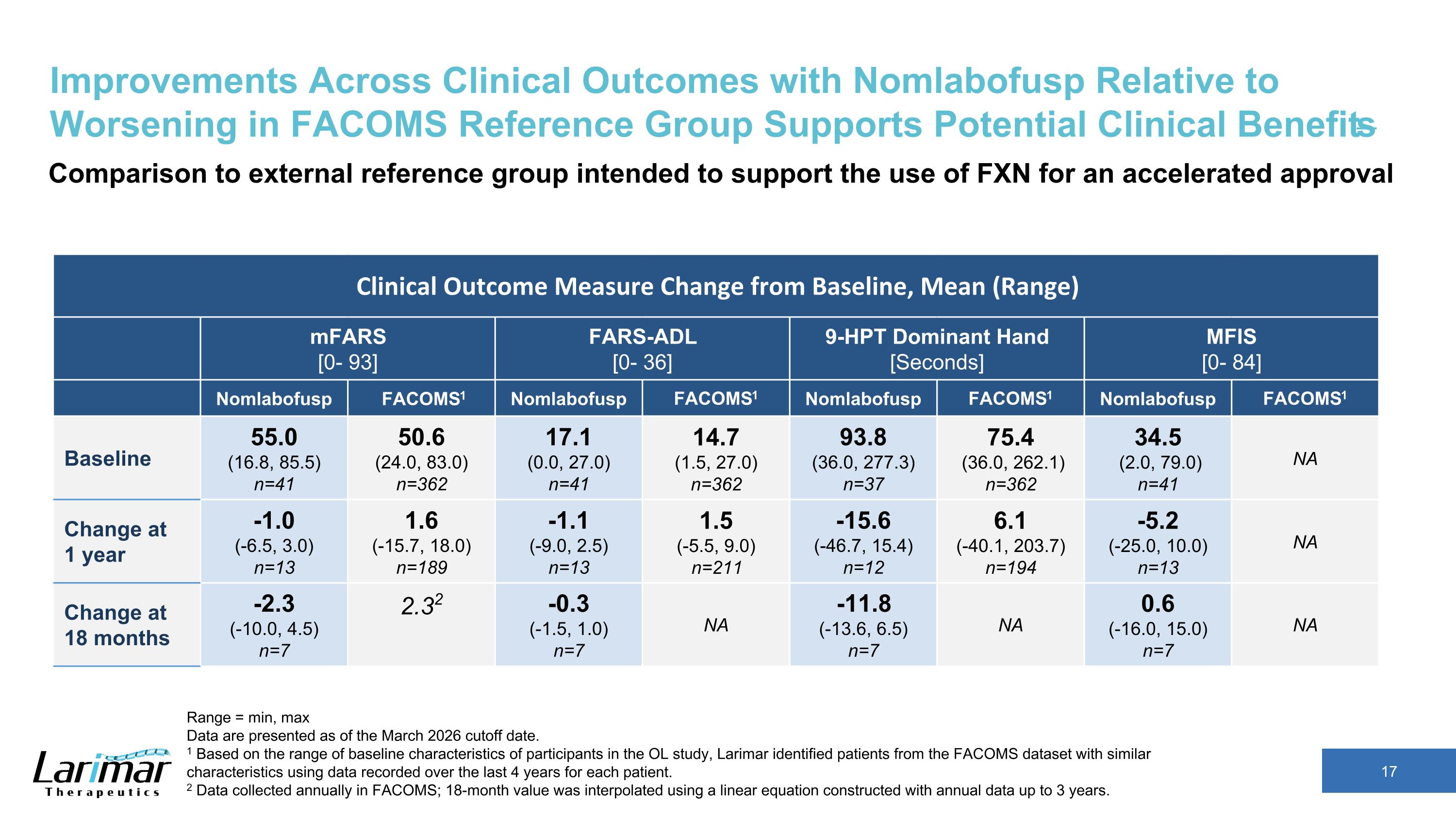
•Continued directional improvement across mFARS, FARS-ADL, 9-HPT, MFIS observed at 1 year of nomlabofusp treatment (n = 13) relative to a worsening in a FACOMS natural history study reference population
•One of six non-ambulatory participants at baseline became ambulatory after 1 year of dosing; none of the seven ambulatory participants progressed to non-ambulatory at 1 year
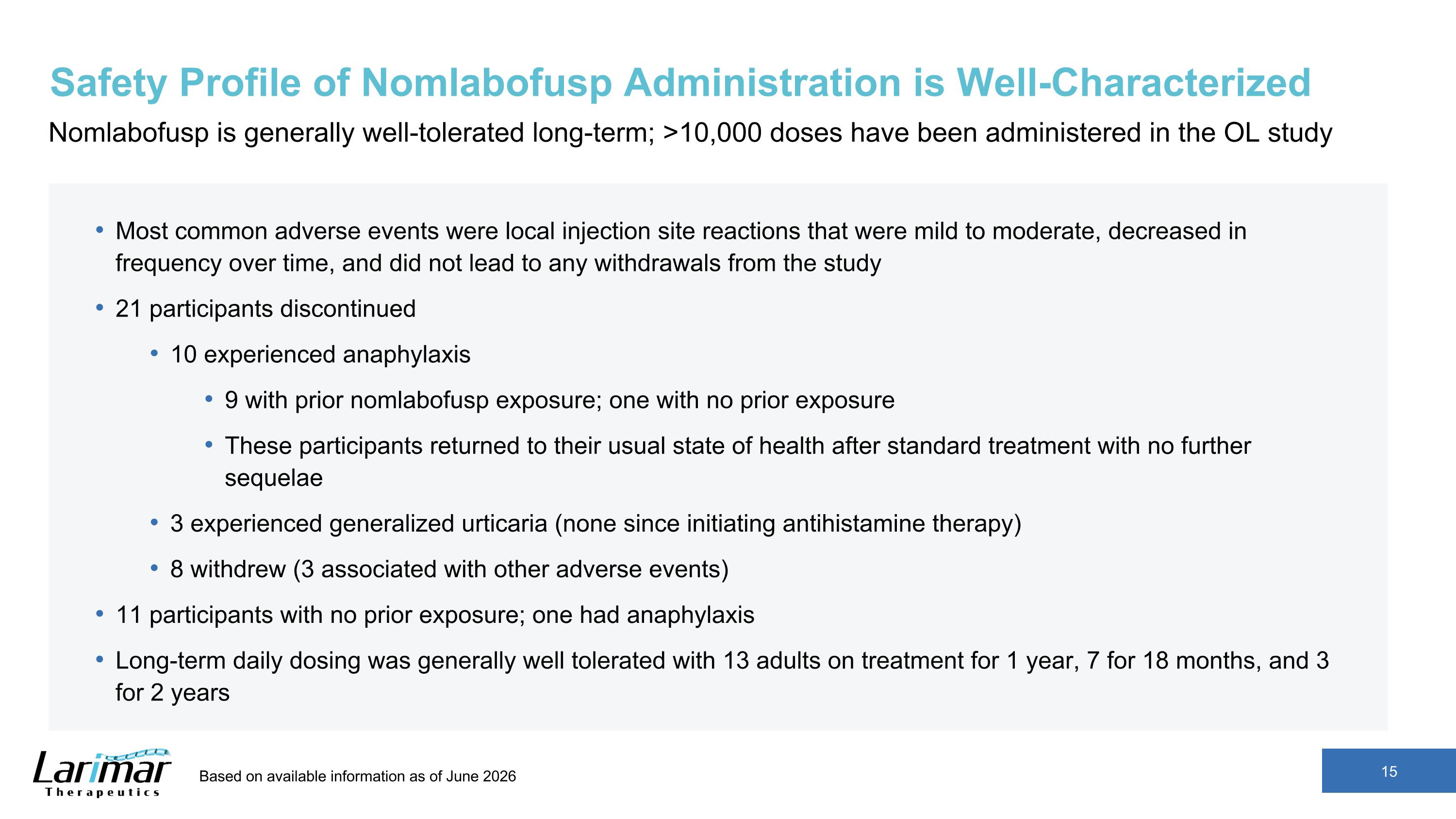
•Well-characterized safety profile; long-term dosing continues to be generally well-tolerated; anaphylaxis occurred in 10/43 patients with 9 of the 10 having exposure to nomlabofusp in a prior study
•11 participants had no exposure to nomlabofusp in a prior study; 1 experienced anaphylaxis
•Dosing of first patient in global confirmatory Phase 3 study expected Q3 2026
•Company management to host webcast and conference call today at 7:45 a.m. EDT
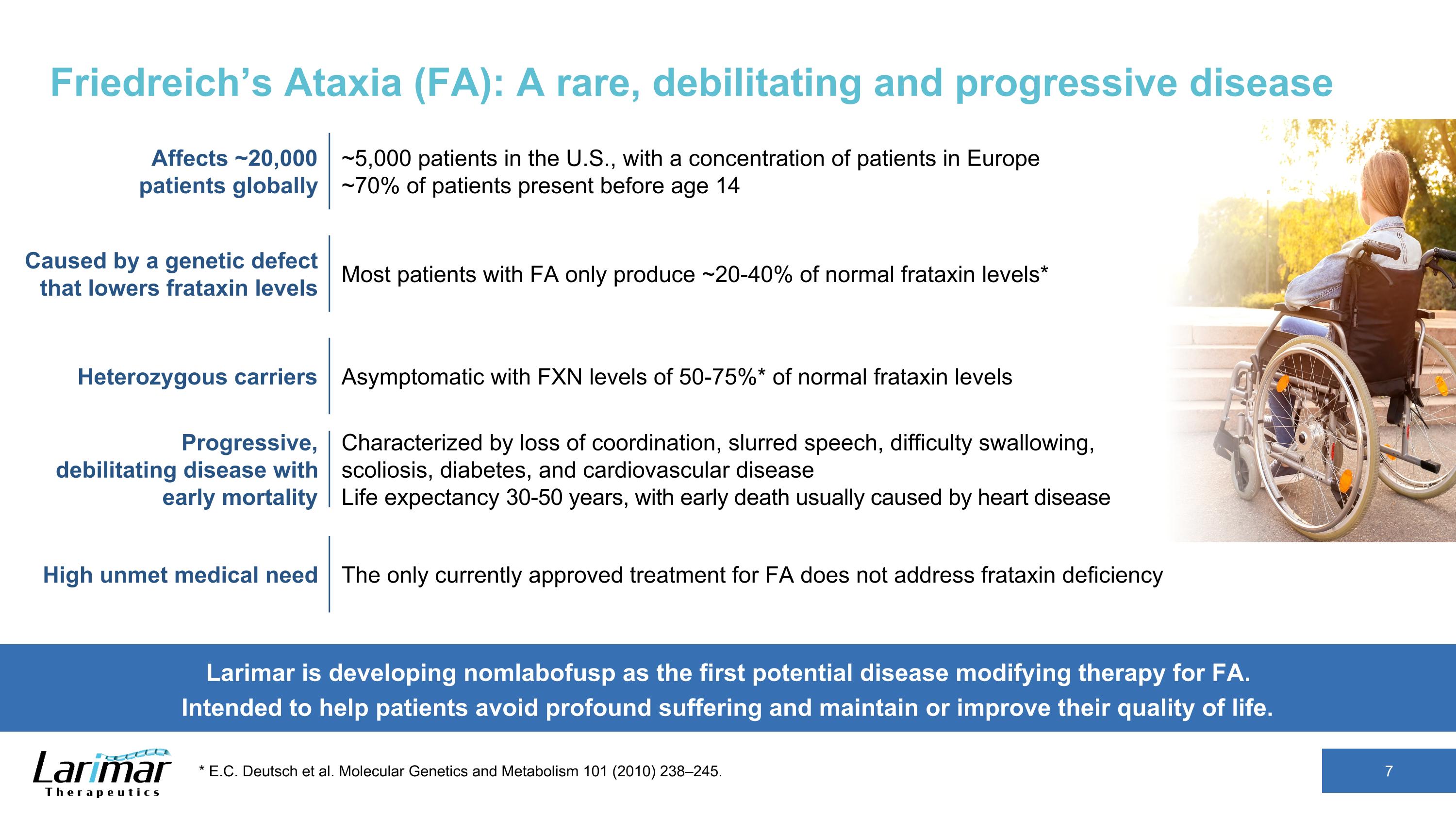
Bala Cynwyd, PA, June 29, 2026 – Larimar Therapeutics, Inc. (Larimar) (Nasdaq: LRMR), a clinical-stage biotechnology company focused on developing treatments for complex rare diseases, today announced it has submitted the first module of its rolling Biologics License Application (BLA) submission to the Food and Drug Administration (FDA) for accelerated approval of nomlabofusp; the remaining modules are expected to be submitted in the second half of 2026. The submission was made after obtaining FDA meeting minutes of a Type B multidisciplinary pre-BLA meeting. The Company also announced positive data from the ongoing long-term open label (OL) study evaluating daily subcutaneous injections of nomlabofusp in adolescent and adult patients with Friedreich’s ataxia (FA). FA is a rare, progressive, and fatal neurological disease with no approved disease modifying therapies that address the root cause of the disease.
“Today’s data represent a pivotal milestone for Larimar and, most importantly, for the FA community,” said Carole Ben-Maimon, MD, President and Chief Executive Officer of Larimar. “In the Type B multi-disciplinary pre-BLA meeting minutes, FDA confirmed that our existing data package appears to be sufficient to support a BLA submission seeking accelerated approval based on skin frataxin as a potential novel surrogate endpoint and approval will be a matter of review. We are very excited to share some unique and important initial observations in our publicly available program update deck and on our conference call later this morning. These data together reinforce the strong clinical and biomarker evidence we have built to date for nomlabofusp. With compelling and consistent OL study data in hand, rolling BLA submission initiated, and dosing of the first patient in our global confirmatory Phase 3 study approaching, we are executing on all fronts to bring what could be the first disease-modifying therapy to pediatric and adult patients living with FA.”
Dr. Rusty Clayton, Chief Medical Officer of Larimar added, “With longer-term treatment of more patients at the 50 mg dose, we continue to see improvements in multiple clinical outcome measures reinforcing the positive benefit-risk profile of nomlabofusp. Moreover, study participants who received nomlabofusp
treatment for at least one year were able to improve FA disease progression. Further improvement was observed in participants who completed 18 months of dosing. Collectively, sustained elevations in skin FXN concentrations with concomitant directional improvements in key clinical outcomes relative to a FA natural reference population, along with a well-characterized safety profile, support the potential of nomlabofusp to meaningfully alter the course of this devastating disease.”
The OL study is evaluating the safety and tolerability, pharmacokinetics (PK), and frataxin (FXN) levels in skin and buccal cells, along with exploratory pharmacodynamic (PD) markers (lipid profiles and gene expression) and clinical outcomes following long-term subcutaneous administration of nomlabofusp. The OL study protocol has now been amended to include children 2-11 years of age, adolescents and adults who have not participated in a prior nomlabofusp study.
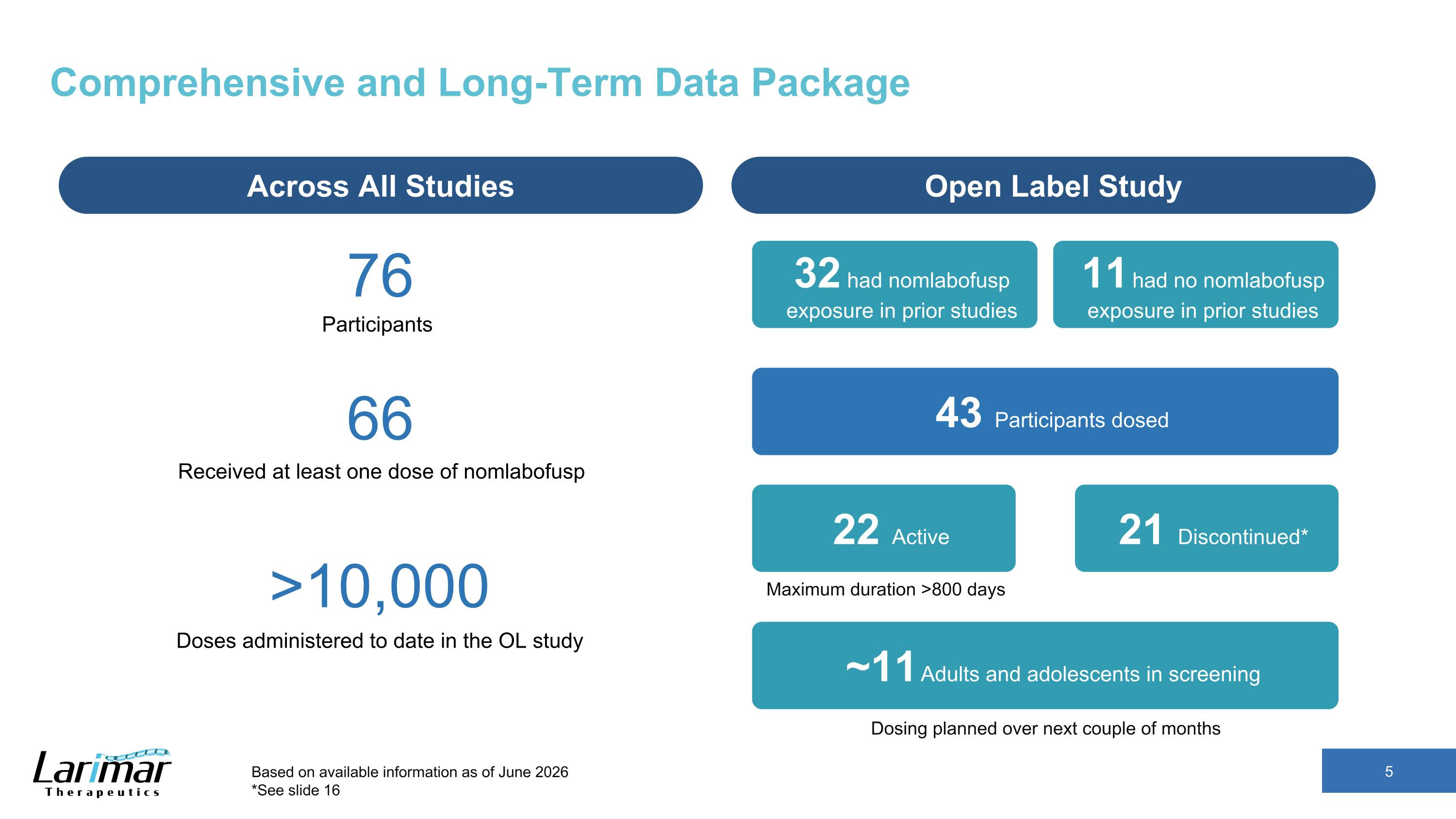
As of June 2026, 43 adolescent and adult participants in the OL study had received at least one dose of nomlabofusp and 22 participants remain in the study with a maximum treatment duration of more than 800 days. Among the study participants, approximately 49% were non-ambulatory at baseline.
Consistent Long-term Safety Profile
•Long-term daily dosing was generally well tolerated with 13 adults on treatment for 1 year, 7 for 18 months, and 3 for 2 years
•>10,000 doses of nomlabofusp have been administered in the OL study
•Most common adverse events are local injection site reactions that were mild to moderate, decreased in frequency over time, and did not lead to any withdrawals from the study
•21 participants discontinued
•10 of 41 participants in OL study experienced anaphylaxis
•9 had prior exposure to nomlabofusp, one had no prior exposure
•All participants returned to their usual state of health after receiving standard treatment with no further sequelae
•3 experienced generalized urticaria (no new occurrences since initiating antihistamine therapy)
•8 withdrew (3 due to other adverse events)
•11 participants with no prior exposure; one had anaphylaxis
Skin FXN Increased and Reached Steady State with Long-term Daily Nomlabofusp
|
|
|
|
|
|
*Absolute Mean Skin FXN Levels pg/µg (Range) |
Baseline |
1 month |
3 months |
6 months |
1 year |
18 months |
3.7 (1.5, 8.8),
n = 27 |
8.9 (2.9, 22.9),
n = 26 |
12.5 (5.6, 37.1),
n = 20 |
12.3 (5.6, 26.7),
n = 11 |
12.1 (8.1, 16.1),
n = 9 |
10.7 (9.9, 11.8),
n = 3 |
Note: 8.2 pg/µg represents 50% of the average FXN concentration of healthy volunteers
* Data include all participants with quantifiable FXN levels at each measurement point who had received 25 mg, 50 mg or had the dose increased from 25 mg to 50 mg
Data are presented as of the March 2026 cutoff date
Majority of Participants Achieved Skin FXN Levels Similar to Levels Reported in Asymptomatic Heterozygous Carriers Following Nomlabofusp for 6 Months
|
|
|
|
|
|
% of Participants with Skin FXN Levels in the Range of Asymptomatic Heterozygous Carriers
(> 8.2 pg/µg; ~50% of Mean Healthy Volunteer FXN Concentration) |
Baseline |
1 month |
3 months |
6 months |
12 months |
18 months |
4%
1/27 |
38%
10/26 |
50%
10/20 |
82%
9/11 |
100%
9/9 |
100%
3/3 |
*Data include all participants with quantifiable FXN levels at each measurement point who had received 25 mg, 50 mg or had the dose increased from 25 mg to 50 mg
Data are presented as of the March 2026 cutoff date
Nomlabofusp OL Data Shows Potential for Clinical Benefit vs. FACOMS Reference Population
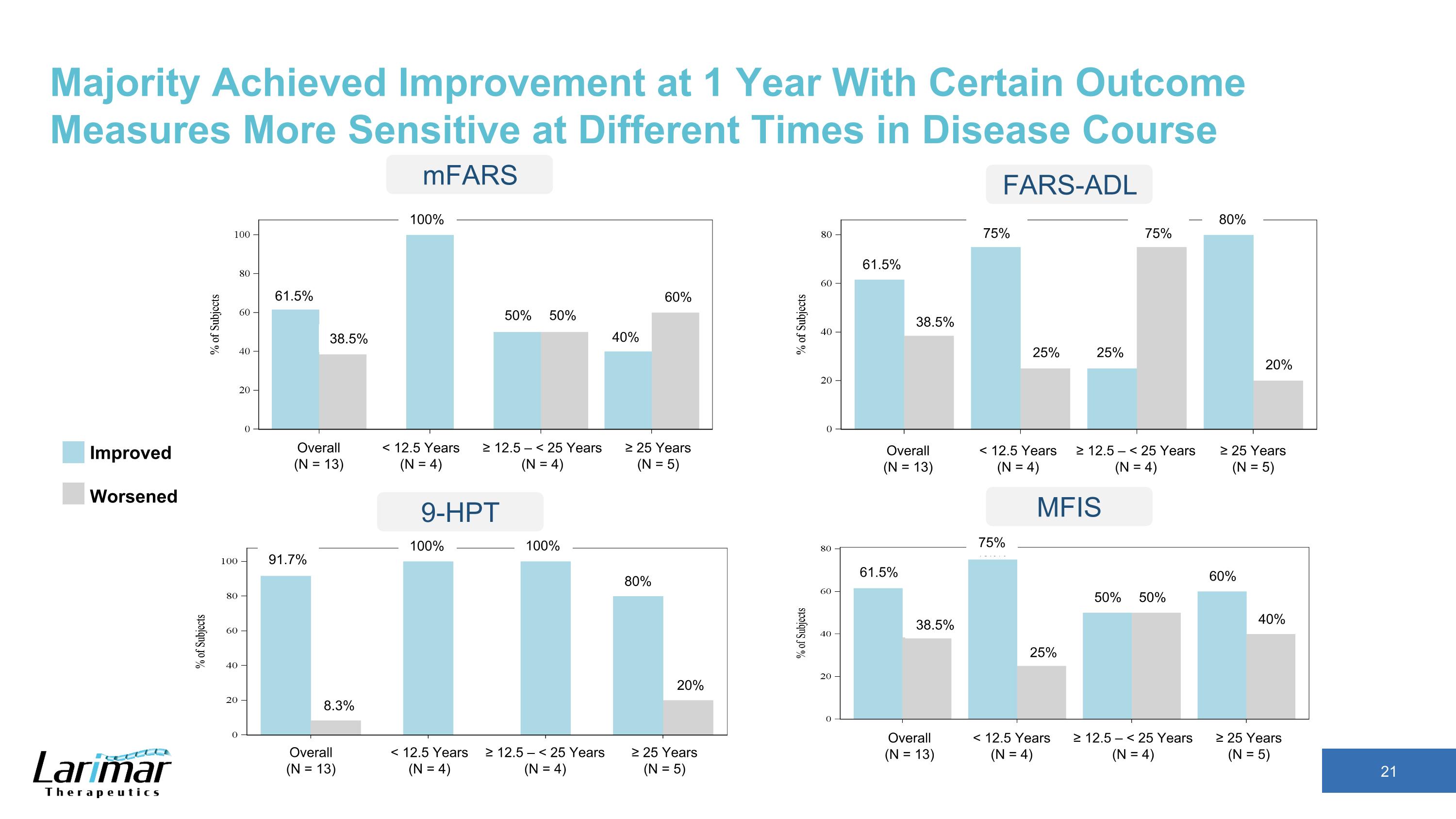
•Directional improvement across mFARS, FARS-ADL, and 9-HPT at 1 year of nomlabofusp treatment (n = 13) relative to a worsening in a Friedreich’s Ataxia Clinical Outcome Measures Study (FACOMS), natural history study reference population
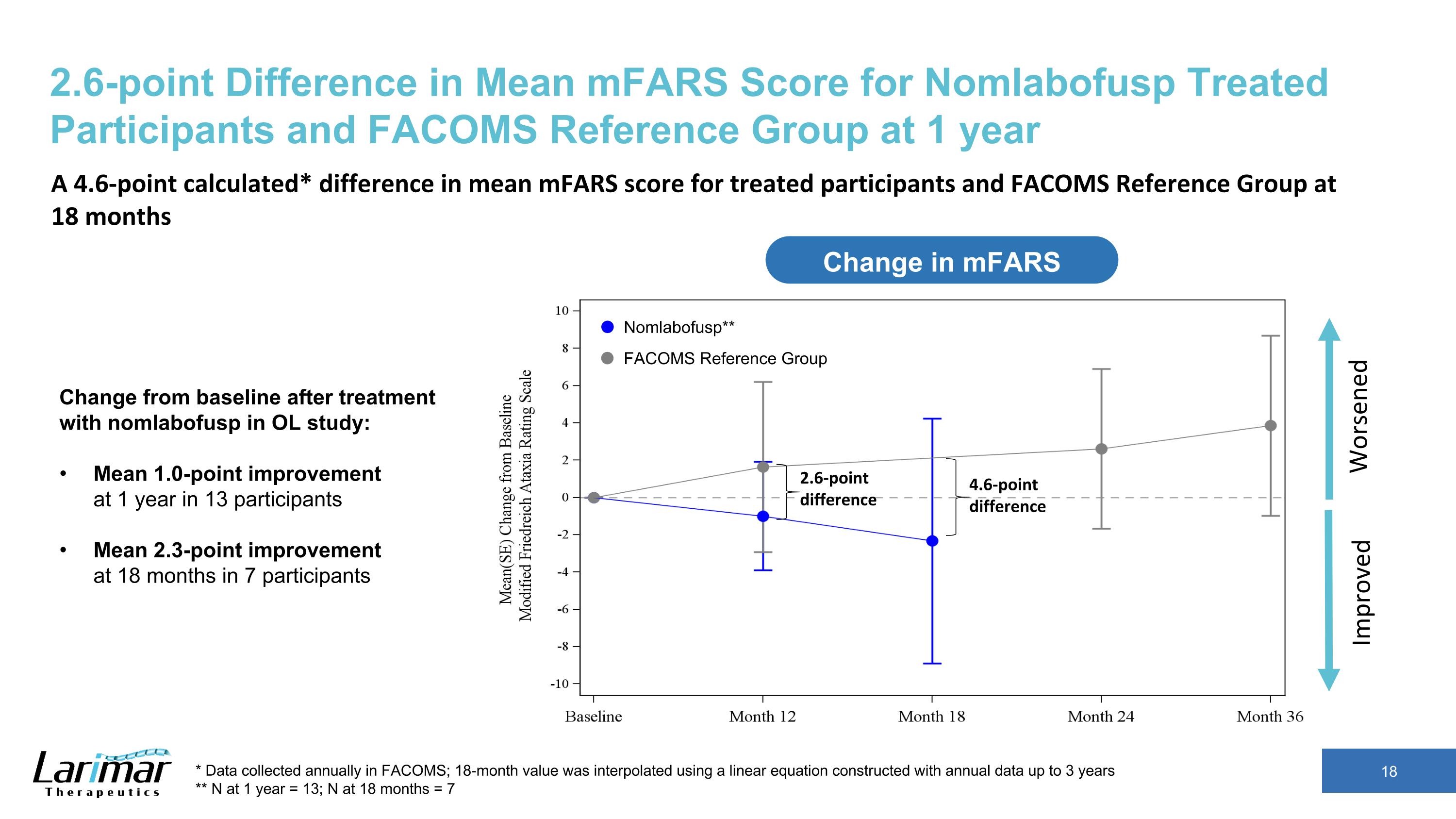
•At 1 year: a mean 1.0-point improvement in mFARS with nomlabofusp treatment compared to a mean 1.6-point worsening in FACOMS reference group, resulting in a 2.6-point difference
•At 18 months: a mean 2.3-point improvement in mFARS with nomlabofusp treatment compared to a calculated mean 2.3-point worsening in FACOMS reference group, resulting in a calculated 4.6-point difference
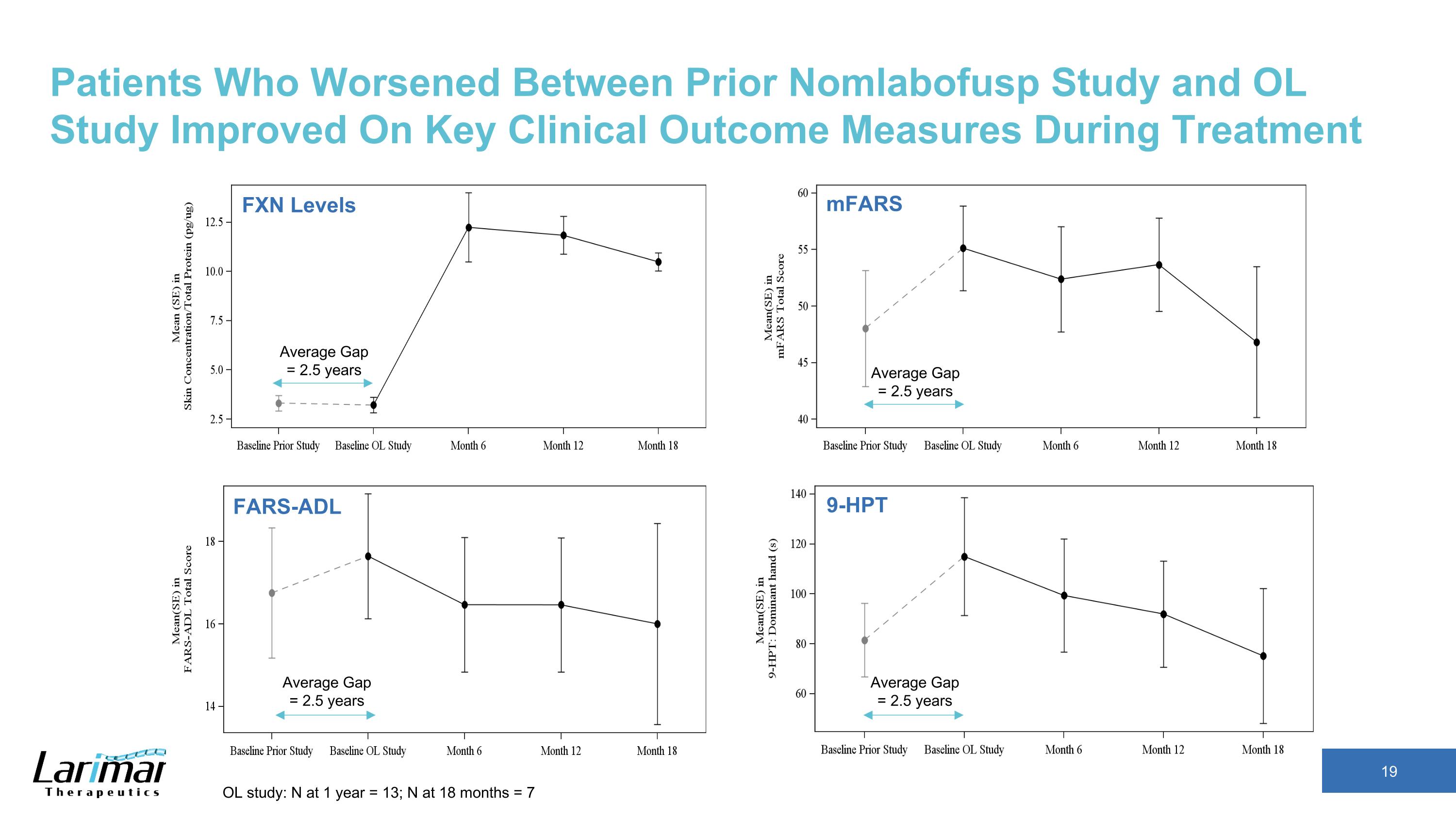
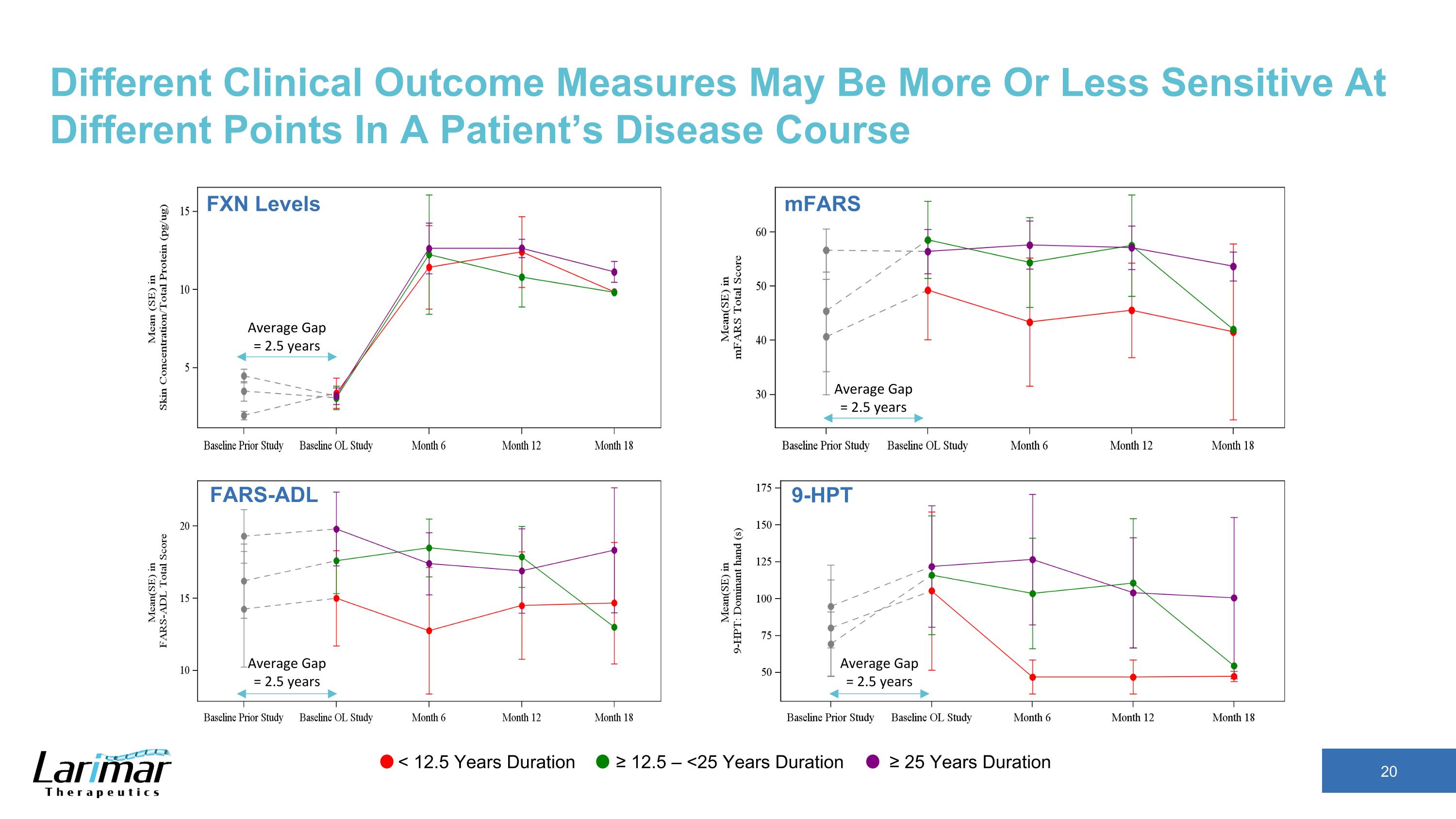
•In participants entering the OL study, key clinical outcome measures had worsened when compared to baseline in prior studies over an average of 2.5 years. Improvement in these same participants occurred during the first year of participation in the OL study
•In the 13 participants completing 1 year of dosing with nomlabofusp, 6 participants were non-ambulatory and 7 were ambulatory at baseline. At the 1 year timepoint, none of the ambulatory patients had progressed to non-ambulatory status, and 1 patient who was non-ambulatory became ambulatory.
•Improvement in clinical outcomes was associated with increased skin FXN levels
•These clinical findings support that increase in tissue FXN levels after treatment with nomlabofusp may lead to clinical benefit across a broad spectrum of patients with FA, including those with advanced disease
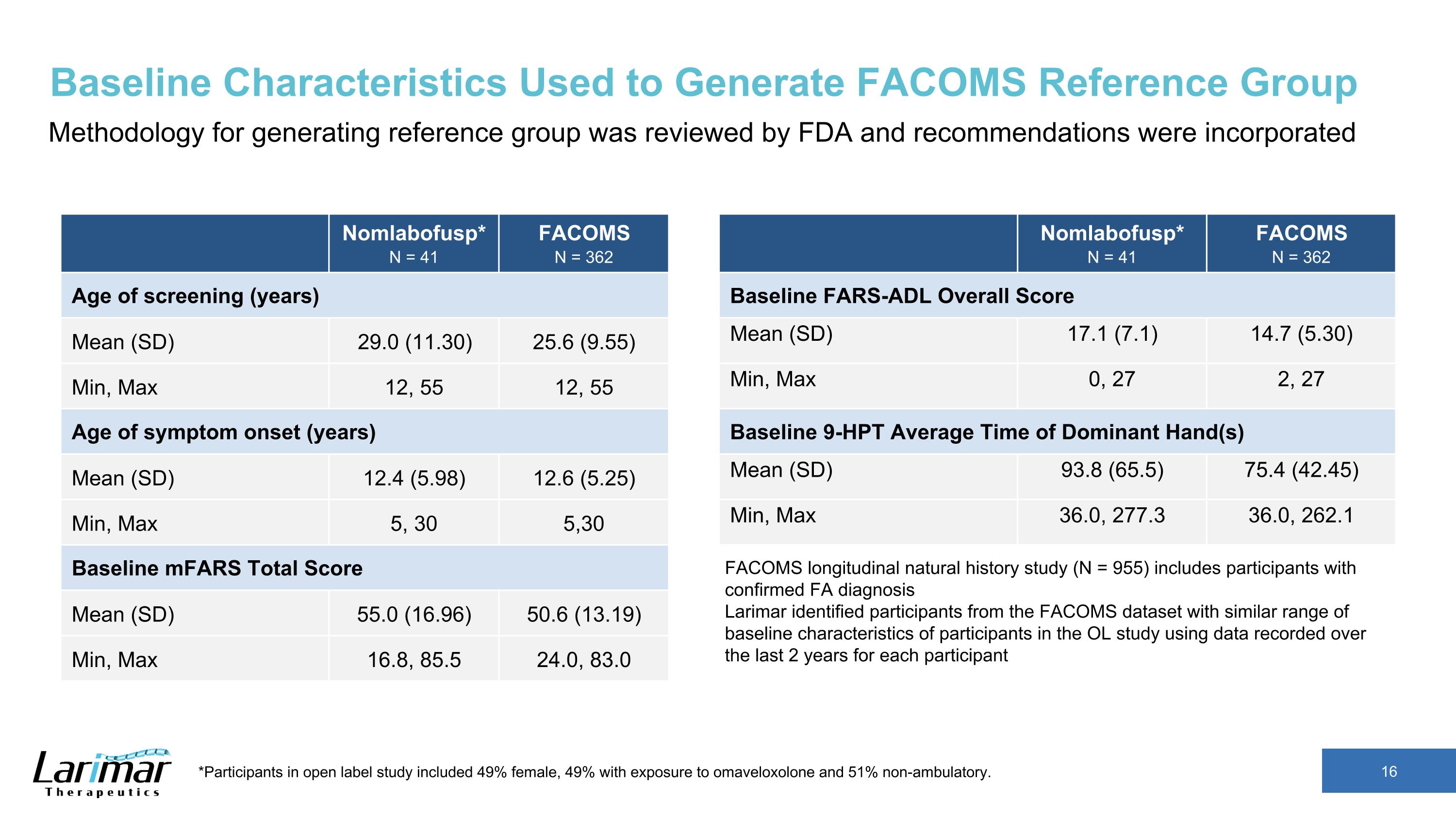
FACOMS Reference Population is Based on Characteristics Similar to OL Study
•FACOMS, a longitudinal natural history study, includes patients with confirmed FA diagnosis
•Reference population is based on the range of baseline characteristics of participants in the OL study and FDA recommendations on the methodology to generate the reference population
|
|
|
|
|
|
|
|
Clinical Outcome Measure Change from Baseline, Mean (Range) |
|
mFARS3
[0- 93] |
FARS-ADL3
[0- 36] |
9-HPT: Dominant Hand3 [Seconds] |
MFIS3
[0- 84]2 |
|
Nomlabofsp |
FACOMS1 |
Nomlabofusp |
FACOMS1 |
Nomlabofusp |
FACOMS1 |
Nomlabofusp |
1 year |
-1.0 (-6.5, 3.0) n=13 |
1.6 (-15.7, 18.0) n=189 |
-1.1 (-9.0, 2.5) n=13 |
1.5 (-5.5, 9.0) n=211 |
-15.6 (-46.7, 15.4) n=12 |
6.1 (-40.1, 203.7) N=194 |
-5.2 (-25.0, 10.0) n=13 |
18 mos |
-2.3 (-10.0, 4.5) n=7 |
2.32 |
-0.3 (-1.5, 1.0) n=7 |
NA |
-11.8 (-13.6, 6.5) n=7 |
NA |
0.6 (-16.0, 15.0) n=7 |
Range = min, max
1 Based on the range of baseline characteristics of participants in the OL study, Larimar identified patients from the
FACOMS dataset with similar characteristics using data recorded over the last 4 years for each patient
2 Data collected annually in FACOMS; 18-month value was interpolated using a linear equation constructed with annual data up to 3 years
3Modified Friedreich Ataxia Rating Scale (mFARS), FARS-Activities of Daily Living (FARS-ADL), 9-hole peg test (9-HPT)
Data are presented as of the March 2026 cutoff date
Dr. Marshall Summar, Chief Executive Officer (CEO) of Uncommon Cures, past Founding Director of the Rare Disease Institute and Margaret O’Malley Chair of Genetic Medicine at Children’s National Hospital added, “As the CEO of a key clinical site in the OL study and a career Medical Geneticist, I have seen firsthand the significant burden that FA places on patients and their families. The data generated to date suggest that nomlabofusp has the potential to meaningfully impact the underlying biology of the disease and translate into clinically relevant benefits. The clinical improvements observed so far are promising and mark a meaningful step toward what could become the first disease-modifying therapy for a patient population with significant unmet medical needs.”
FDA Alignment for Submission of the BLA Package for Accelerated Approval in Multi-disciplinary Type B Pre-BLA Meeting Minutes
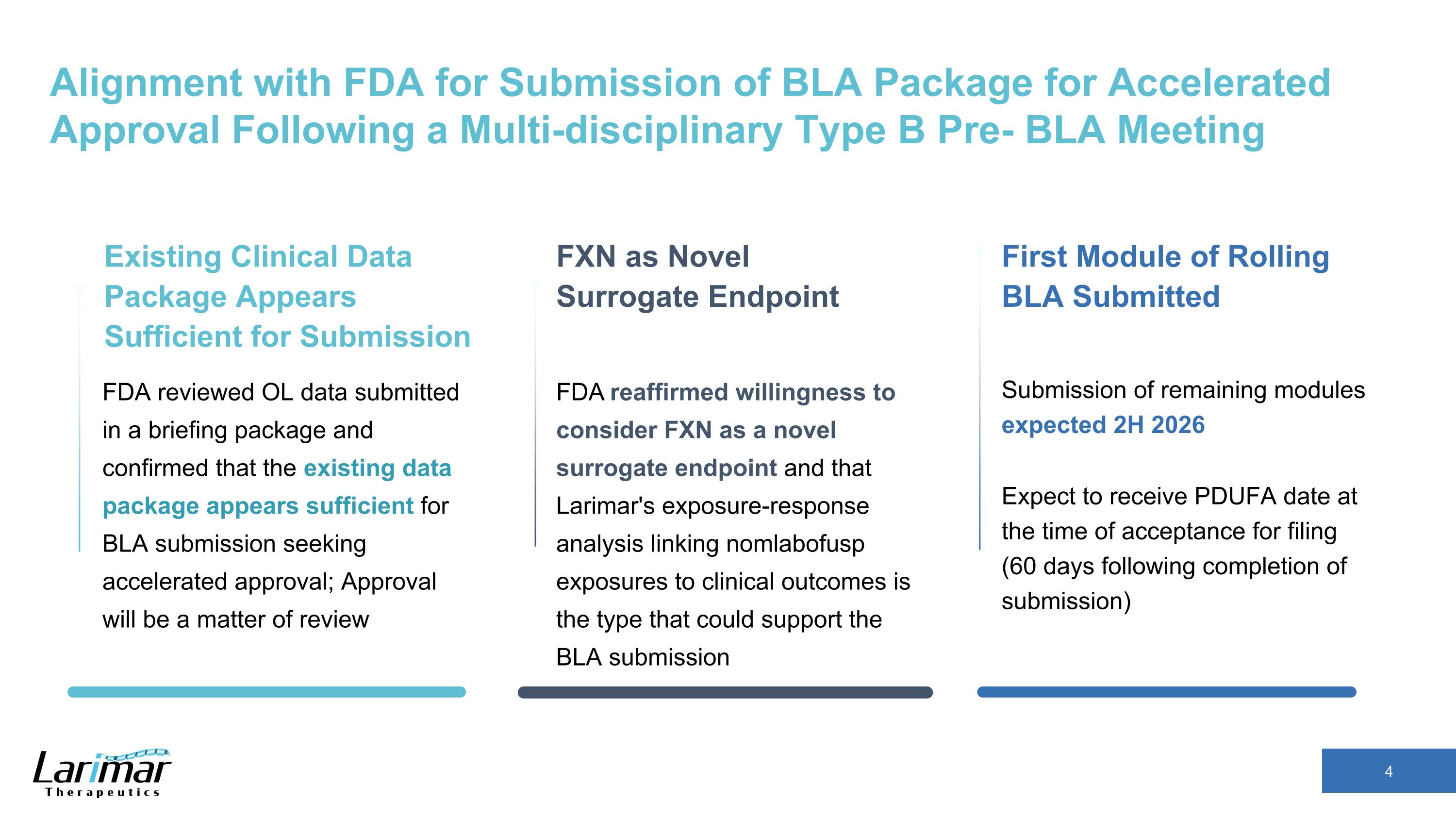
•Sufficient Data Package: FDA reviewed OL data submitted in a briefing package and confirmed that the existing data package appears capable of supporting submission and review of a BLA seeking accelerated approval; approval will be a matter of review.
•FXN as Surrogate Endpoint: FDA had reaffirmed willingness to consider FXN as a novel surrogate endpoint and confirmed that Larimar's exposure-response analysis linking nomlabofusp exposures to clinical outcomes is the type that could support the BLA submission.
•Gene Expression and Lipid Data: FDA noted that prospectively collected exploratory gene expression and lipid biomarkers may support the biomarker data and provide additional support to the novel surrogate endpoint and mechanism of action of nomlabofusp beyond tissue FXN concentrations.
•Rolling BLA Submission: FDA agreed to a rolling BLA submission, and the first module has been submitted.
Key Upcoming Milestones
•Dosing of first patient in global confirmatory Phase 3 study planned Q3 2026
•Submission of final modules for rolling BLA submission expected 2H 2026
•Targeting mid-2027 launch, if approved
Webcast Details
To access the webcast on Monday, June 29, 2026, at 7:45 am EDT, please visit this link to the event. Following the live event, an archived webcast will be available on the “Events & Presentations” page of the Larimar website.
About Larimar Therapeutics
Larimar Therapeutics, Inc. (Nasdaq: LRMR), is a clinical-stage biotechnology company focused on developing treatments for complex rare diseases. Larimar’s lead compound, nomlabofusp, is being developed as a potential treatment for Friedreich's ataxia. Larimar also plans to use its intracellular delivery platform to design other fusion proteins to target additional rare diseases characterized by deficiencies in intracellular bioactive compounds. For more information, please visit: https://larimartx.com.
Forward-Looking Statements
This press release contains forward-looking statements that are based on Larimar’s management’s beliefs and assumptions and on information currently available to management. All statements contained in this press release other than statements of historical fact are forward-looking statements, including but not limited to statements regarding Larimar’s ability to develop and commercialize nomlabofusp and any other planned product candidates, Larimar’s planned research and development efforts, including the
timing of its nomlabofusp clinical trials, including the dosing of a first patient in a global confirmatory Phase 3 study, interactions and filings with the FDA, the safety and therapeutic potential of nomlabofusp , expectations regarding the timing of completion of the BLA submission, the expectations of the timing of, and potential for, accelerated approval or accelerated access, time to launch and market and overall development plans and other matters regarding Larimar’s business strategies, ability to raise capital, use of capital, results of operations and financial position, and plans and objectives for future operations.
In some cases, you can identify forward-looking statements by the words “may,” “will,” “could,” “would,” “should,” “expect,” “intend,” “plan,” “anticipate,” “believe,” “estimate,” “predict,” “project,” “potential,” “continue,” “ongoing” or the negative of these terms or other comparable terminology, although not all forward-looking statements contain these words. These statements involve risks, uncertainties and other factors that may cause actual results, performance, or achievements to be materially different from the information expressed or implied by these forward-looking statements. These risks, uncertainties and other factors include, among others, the success, cost and timing of Larimar’s product development activities, nonclinical studies and clinical trials, including nomlabofusp clinical milestones and continued interactions with the FDA; that preliminary clinical trial results may differ from final clinical trial results, that earlier non-clinical and clinical data and testing of nomlabofusp may not be predictive of the results or success of later non-clinical or clinical trials, and assessments; delays in patient recruitment, including as a result of changes in clinical protocols and adverse events; that the FDA may not ultimately agree with Larimar’s nomlabofusp development strategy; Larimar’s ability to submit BLA modules on the intended timeline; Larimar’s ability to realize the benefits of Breakthrough Therapy Designation; the potential impact of public health crises on Larimar’s future clinical trials, manufacturing, regulatory, nonclinical study timelines and operations, and general economic conditions; Larimar’s ability and the ability of third-party manufacturers Larimar engages, to optimize and scale nomlabofusp’s manufacturing process; Larimar’s ability to obtain regulatory approvals for nomlabofusp and future product candidates; Larimar’s ability to develop sales and marketing capabilities, whether alone or with potential future collaborators, and to successfully commercialize any approved product candidates; Larimar’s ability to raise the necessary capital to conduct its product development activities; and other risks described in the filings made by Larimar with the Securities and Exchange Commission (SEC), including but not limited to Larimar’s periodic reports, including the annual report on Form 10-K, quarterly reports on Form 10-Q and current reports on Form 8-K, filed with or furnished to the SEC and available at www.sec.gov. These forward-looking statements are based on a combination of facts and factors currently known by Larimar and its projections of the future, about which it cannot be certain. As a result, the forward-looking statements may not prove to be accurate. The forward-looking statements in this press release represent Larimar’s management’s views only as of the date hereof. Larimar undertakes no obligation to update any forward-looking statements for any reason, except as required by law.
Investor Contact:
Joyce Allaire
LifeSci Advisors
jallaire@lifesciadvisors.com
(212) 915-2569
Company Contact:
Michael Celano
Chief Financial Officer
mcelano@larimartx.com
(484) 414-2715

pro June 2026 Larimar Therapeutics Nomlabofusp Program Update
Forward-Looking Statements This presentation contains forward-looking statements that are based on Larimar’s management’s beliefs and assumptions and on information currently available to management. All statements contained in this presentation other than statements of historical fact are forward-looking statements, including but not limited to statements regarding Larimar’s ability to develop and commercialize nomlabofusp and any other planned product candidates, Larimar’s planned research and development efforts, including the timing of its nomlabofusp clinical trials including the dosing of the first participant in a global confirmatory study, interactions and filings with the FDA, the safety and therapeutic potential of nomlabofusp, expectations regarding the timing of the completion of the BLA submission, the expectations of the timing of, and potential for, accelerated approval or accelerated access, time to launch and market and overall development plans and other matters regarding Larimar’s business strategies, ability to raise capital, use of capital, results of operations and financial position, and plans and objectives for future operations. In some cases, you can identify forward-looking statements by the words “may,” “will,” “could,” “would,” “should,” “expect,” “intend,” “plan,” “anticipate,” “believe,” “estimate,” “predict,” “project,” “potential,” “continue,” “ongoing” or the negative of these terms or other comparable terminology, although not all forward-looking statements contain these words. These statements involve risks, uncertainties and other factors that may cause actual results, performance, or achievements to be materially different from the information expressed or implied by these forward-looking statements. These risks, uncertainties and other factors include, among others, the success, cost and timing of Larimar’s product development activities, nonclinical studies and clinical trials, including nomlabofusp clinical milestones and continued interactions with the FDA; that preliminary clinical trial results may differ from final clinical trial results, that earlier non-clinical and clinical data and testing of nomlabofusp may not be predictive of the results or success of later non-clinical or clinical trials, and assessments; delays in patient recruitment, including as a result of changes in clinical protocols and adverse events; that the FDA may not ultimately agree with Larimar’s nomlabofusp development strategy; Larimar’s ability to submit BLA modules on the intended timeline; Larimar’s ability to realize the benefits of Breakthrough Therapy Designation; the potential impact of public health crises on Larimar’s future clinical trials, manufacturing, regulatory, nonclinical study timelines and operations, and general economic conditions; Larimar’s ability and the ability of third-party manufacturers Larimar engages, to optimize and scale nomlabofusp’s manufacturing process; Larimar’s ability to obtain regulatory approvals for nomlabofusp and future product candidates; Larimar’s ability to develop sales and marketing capabilities, whether alone or with potential future collaborators, and to successfully commercialize any approved product candidates; Larimar’s ability to raise the necessary capital to conduct its product development activities; and other risks described in the filings made by Larimar with the Securities and Exchange Commission (SEC), including but not limited to Larimar’s periodic reports, including the annual report on Form 10-K, quarterly reports on Form 10-Q and current reports on Form 8-K, filed with or furnished to the SEC and available at www.sec.gov. These forward-looking statements are based on a combination of facts and factors currently known by Larimar and its projections of the future, about which it cannot be certain. As a result, the forward-looking statements may not prove to be accurate. The forward-looking statements in this presentation represent Larimar’s management’s views only as of the date hereof. Larimar undertakes no obligation to update any forward-looking statements for any reason, except as required by law.
Initiated Rolling BLA Submission for Accelerated Approval; Positive Open Label Study Data Positive Longer-Term OL Data Skin FXN levels continue to be similar to those of asymptomatic carriers at 6, 12 and 18 months Improvement in clinical outcome measures with 13 participants at 1 year Long term dosing continues to be generally well tolerated FDA Alignment on BLA Submission Type B meeting minutes indicate current clinical data package is sufficient for submission Continued willingness to consider FXN as surrogate endpoint; approval will be a matter of review Initial module submitted for rolling BLA, with submission of remaining modules expected 2H 2026 $200.4 million in cash and investments as of March 31, 2026, with projected cash runway into Q2 2027; Expect to be eligible for rare pediatric disease priority review voucher. Plan to Start Confirmatory Global Phase 3 Dosing of first patient expected Q3 2026 Plan to enroll ambulatory patients 2 – 40 years old with 2/3 under the age of 21 years Sites in U.S., EU, U.K., Canada, and Australia planned
Alignment with FDA for Submission of BLA Package for Accelerated Approval Following a Multi-disciplinary Type B Pre- BLA Meeting FXN as Novel�Surrogate Endpoint FDA reaffirmed willingness to consider FXN as a novel surrogate endpoint and that Larimar's exposure-response analysis linking nomlabofusp exposures to clinical outcomes is the type that could support the BLA submission Existing Clinical Data �Package Appears Sufficient for Submission FDA reviewed OL data submitted in a briefing package and confirmed that the existing data package appears sufficient for BLA submission seeking accelerated approval; Approval will be a matter of review First Module of Rolling BLA Submitted Submission of remaining modules �expected 2H 2026 Expect to receive PDUFA date at the time of acceptance for filing (60 days following completion of submission)
Comprehensive and Long-Term Data Package Across All Studies Open Label Study 76 Participants >10,000 Doses administered to date in the OL study 66 Received at least one dose of nomlabofusp 43 Participants dosed 22 Active 21 Discontinued* Maximum duration >800 days ~11 Adults and adolescents in screening Dosing planned over next couple of months 32 had nomlabofusp exposure in prior studies 11 had no nomlabofusp exposure in prior studies Based on available information as of June 2026 *See slide 16
Additional Patients with Longer Exposure Reinforces the Disease Modifying Potential of Nomlabofusp 13 participants completed 1 year of dosing, 7 completed 18 months, and 3 completed 2 years Well-Characterized Safety Profile Increased Tissue FXN Levels Observed Improvement of Clinical Outcomes Daily nomlabofusp increased and sustained skin FXN levels Achieved and maintained skin FXN levels similar to asymptomatic carriers (~50% or higher) 82% (9/11) at 6 months 100% (9/9) at 1 year 100% (3/3) at 18 months At 1-year: a 2.6-point mFARS advantage when nomlabofusp treatment is compared to a FACOMS reference group At 18 months: a 4.6-point mFARS advantage when nomlabofusp treatment is compared to a calculated value in a FACOMS reference group Long term dosing continues to be generally well tolerated for up to a maximum of 800 days Most common AEs are mild to moderate injection site reactions that decrease over time 10 cases of anaphylaxis, �9 with exposure to nomlabofusp in a prior study Based on available information as of June 2026
Friedreich’s Ataxia (FA): A rare, debilitating and progressive disease 7 * E.C. Deutsch et al. Molecular Genetics and Metabolism 101 (2010) 238–245. Larimar is developing nomlabofusp as the first potential disease modifying therapy for FA. Intended to help patients avoid profound suffering and maintain or improve their quality of life. Affects ~20,000 patients globally ~5,000 patients in the U.S., with a concentration of patients in Europe�~70% of patients present before age 14 Caused by a genetic defect that lowers frataxin levels Most patients with FA only produce ~20-40% of normal frataxin levels* Heterozygous carriers Asymptomatic with FXN levels of 50-75%* of normal frataxin levels High unmet medical need The only currently approved treatment for FA does not address frataxin deficiency Progressive, debilitating disease with early mortality Characterized by loss of coordination, slurred speech, difficulty swallowing, scoliosis, diabetes, and cardiovascular disease �Life expectancy 30-50 years, with early death usually caused by heart disease
Nomlabofusp is Designed to Target the Root Cause of FA, FXN Deficiency Nomlabofusp (CTI-1601) maintains the cleavage site between the MTS and mature human frataxin (FXN) The presence of the cleavage site allows the CPP and MTS to be removed by �mitochondrial processing peptidase to produce mature human FXN in the mitochondria Structure of Endogenous FXN Structure of nomlabofusp Cleavage by mitochondrial processing peptidase (MPP) at this site produces mature human FXN in mitochondria Mitochondrial Targeting Sequence (MTS) Mature Human FXN Cleavage by mitochondrial processing peptidase (MPP) at this site produces mature human FXN in mitochondria Mature Human FXN Cell Penetrating Peptide (CPP) Mitochondrial Targeting Sequence (MTS)
Nomlabofusp Awarded Multiple U.S., EU, and U.K. Regulatory Designations Intended to Expedite the Development Program Orphan Drug Designation (EU) PRIME Designation (EU) Innovative Licensing and Access Pathway (ILAP) (UK) Breakthrough Therapy Designation START Pilot Program Orphan Drug Designation Fast Track Designation Rare Pediatric Disease Designation Rare pediatric disease priority review voucher program extended to 2029; �Expected to be available at time of approval GLOBAL DESIGNATIONS US DESIGNATIONS Rare Pediatric Disease Designation Breakthrough Therapy Designation
Nomlabofusp Long-term Open Label Study (Ongoing)
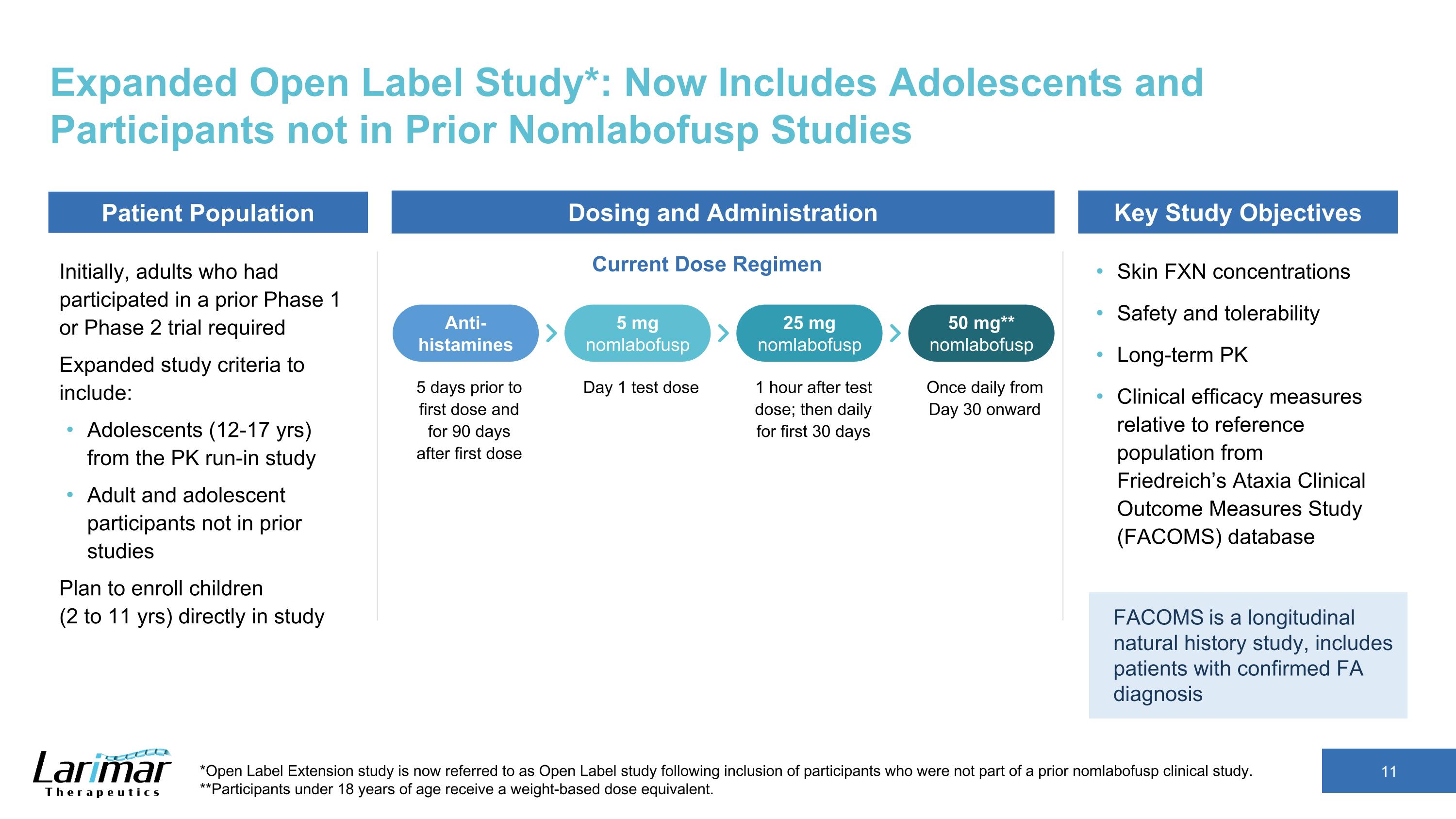
Expanded Open Label Study*: Now Includes Adolescents and Participants not in Prior Nomlabofusp Studies Initially, adults who had participated in a prior Phase 1 or Phase 2 trial required Expanded study criteria to include: Adolescents (12-17 yrs) from the PK run-in study Adult and adolescent participants not in prior studies Plan to enroll children �(2 to 11 yrs) directly in study Skin FXN concentrations Safety and tolerability Long-term PK Clinical efficacy measures relative to reference population from Friedreich’s Ataxia Clinical Outcome Measures Study (FACOMS) database *Open Label Extension study is now referred to as Open Label study following inclusion of participants who were not part of a prior nomlabofusp clinical study. **Participants under 18 years of age receive a weight-based dose equivalent. Patient Population Current Dose Regimen Dosing and Administration Key Study Objectives 5 days prior to first dose and for 90 days after first dose Anti-histamines 5 mg nomlabofusp 25 mg nomlabofusp 50 mg** nomlabofusp Day 1 test dose 1 hour after test dose; then daily for first 30 days Once daily from Day 30 onward FACOMS is a longitudinal natural history study, includes patients with confirmed FA diagnosis
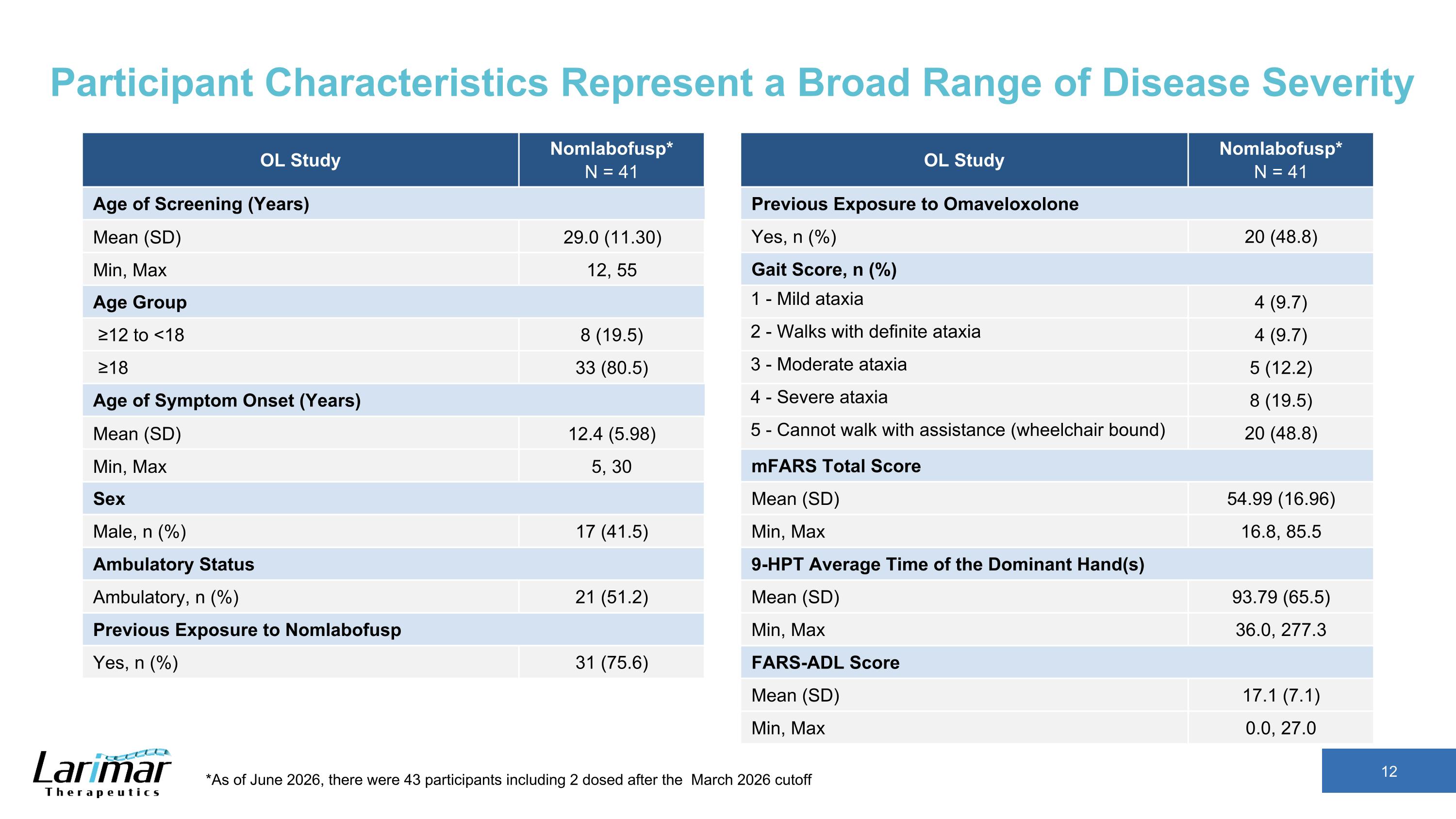
Participant Characteristics Represent a Broad Range of Disease Severity *As of June 2026, there were 43 participants including 2 dosed after the March 2026 cutoff OL Study Nomlabofusp* N = 41 Age of Screening (Years) Mean (SD) 29.0 (11.30) Min, Max 12, 55 Age Group ≥12 to <18 8 (19.5) ≥18 33 (80.5) Age of Symptom Onset (Years) Mean (SD) 12.4 (5.98) Min, Max 5, 30 Sex Male, n (%) 17 (41.5) Ambulatory Status Ambulatory, n (%) 21 (51.2) Previous Exposure to Nomlabofusp Yes, n (%) 31 (75.6) OL Study Nomlabofusp* N = 41 Previous Exposure to Omaveloxolone Yes, n (%) 20 (48.8) Gait Score, n (%) 1 - Mild ataxia 4 (9.7) 2 - Walks with definite ataxia 4 (9.7) 3 - Moderate ataxia 5 (12.2) 4 - Severe ataxia 8 (19.5) 5 - Cannot walk with assistance (wheelchair bound) 20 (48.8) mFARS Total Score Mean (SD) 54.99 (16.96) Min, Max 16.8, 85.5 9-HPT Average Time of the Dominant Hand(s) Mean (SD) 93.79 (65.5) Min, Max 36.0, 277.3 FARS-ADL Score Mean (SD) 17.1 (7.1) Min, Max 0.0, 27.0
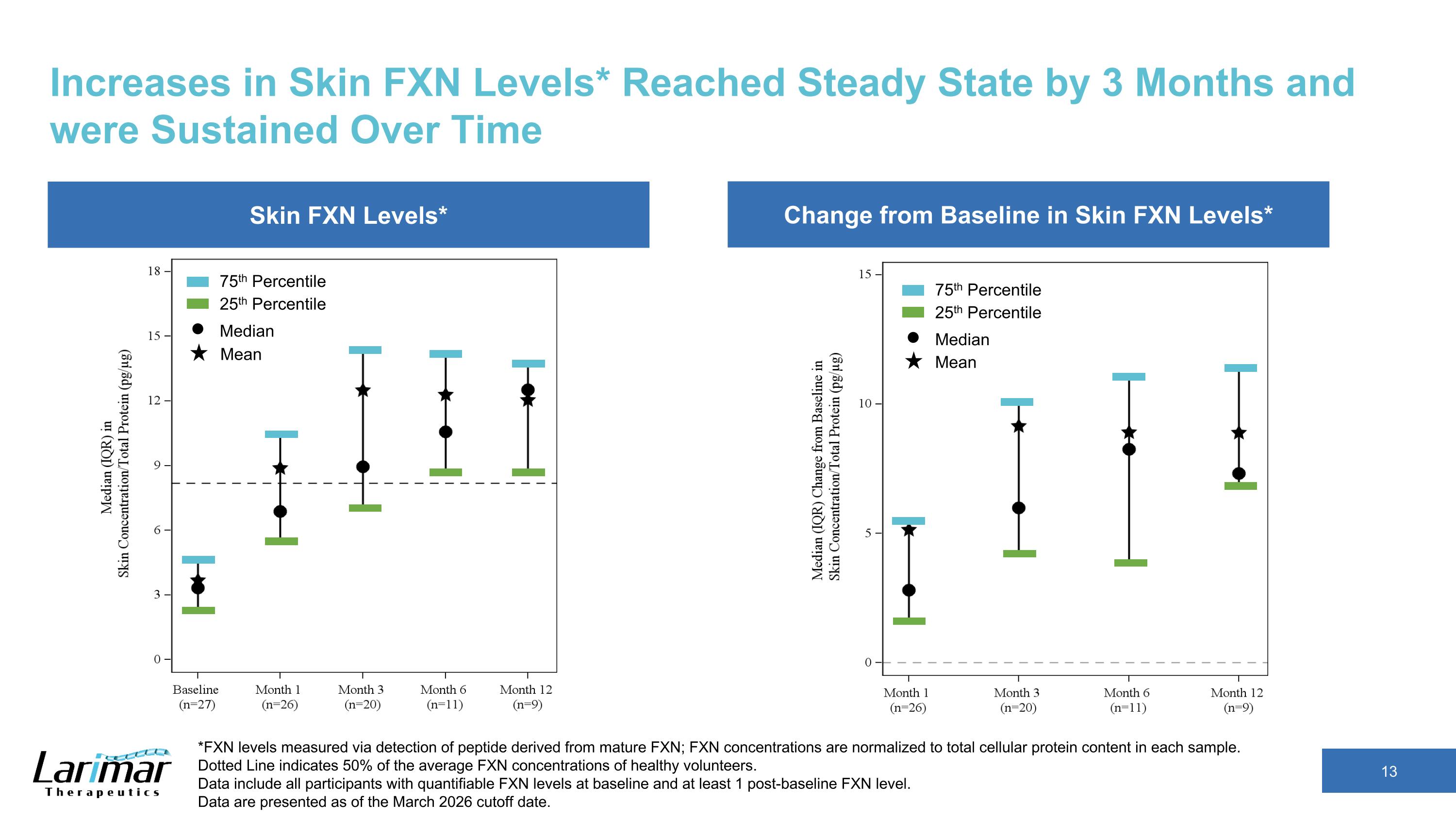
Change from Baseline in Skin FXN Levels* Skin FXN Levels* Increases in Skin FXN Levels* Reached Steady State by 3 Months and were Sustained Over Time *FXN levels measured via detection of peptide derived from mature FXN; FXN concentrations are normalized to total cellular protein content in each sample. Dotted Line indicates 50% of the average FXN concentrations of healthy volunteers.�Data include all participants with quantifiable FXN levels at baseline and at least 1 post-baseline FXN level. Data are presented as of the March 2026 cutoff date. 25th Percentile 75th Percentile Median 25th Percentile 75th Percentile Median Mean Mean
Nomlabofusp Treatment Increased and Sustained FXN Levels in Open Label Study to Range Expected in Asymptomatic Carriers % of Participants with Skin FXN Levels in the Range of Asymptomatic Heterozygous Carriers� (> 8.2 pg/µg; ~50% of Mean Healthy Volunteer FXN Concentration) Baseline 1 month 3 months 6 months 1 year 18 months 4%�1/27 38%�10/26 50%�10/20 82%�9/11 100%�9/9 100%�3/3 *Data include all participants with quantifiable levels at each measurement point who had received 25 mg, 50 mg or had the dose increased from 25 mg to 50 mg. Data are presented as of the March 2026 cutoff date. Absolute Skin FXN Levels* Increased Over Time with Nomlabofusp Treatment Statistic Baseline 1 month 3 months 6 months 1 year 18 months N 27 26 20 11 9 3 Mean 3.7 8.9 12.5 12.3 12.1 10.7 (Min, Max) (1.5, 8.8) (2.9, 22.9) (5.6, 37.1) (5.6, 26.7) (8.1, 16.1) (9.9, 11.8)
Safety Profile of Nomlabofusp Administration is Well-Characterized Nomlabofusp is generally well-tolerated long-term; >10,000 doses have been administered in the OL study Most common adverse events were local injection site reactions that were mild to moderate, decreased in frequency over time, and did not lead to any withdrawals from the study 21 participants discontinued 10 experienced anaphylaxis 9 with prior nomlabofusp exposure; one with no prior exposure These participants returned to their usual state of health after standard treatment with no further sequelae 3 experienced generalized urticaria (none since initiating antihistamine therapy) 8 withdrew (3 associated with other adverse events) 11 participants with no prior exposure; one had anaphylaxis Long-term daily dosing was generally well tolerated with 13 adults on treatment for 1 year, 7 for 18 months, and 3 for 2 years Based on available information as of June 2026
Baseline Characteristics Used to Generate FACOMS Reference Group Methodology for generating reference group was reviewed by FDA and recommendations were incorporated FACOMS longitudinal natural history study (N = 955) includes participants with confirmed FA diagnosis�Larimar identified participants from the FACOMS dataset with similar range of baseline characteristics of participants in the OL study using data recorded over the last 2 years for each participant *Participants in open label study included 49% female, 49% with exposure to omaveloxolone and 51% non-ambulatory. Nomlabofusp* N = 41 FACOMS N = 362 Age of screening (years) Mean (SD) 29.0 (11.30) 25.6 (9.55) Min, Max 12, 55 12, 55 Age of symptom onset (years) Mean (SD) 12.4 (5.98) 12.6 (5.25) Min, Max 5, 30 5,30 Baseline mFARS Total Score Mean (SD) 55.0 (16.96) 50.6 (13.19) Min, Max 16.8, 85.5 24.0, 83.0 Nomlabofusp* N = 41 FACOMS N = 362 Baseline FARS-ADL Overall Score Mean (SD) 17.1 (7.1) 14.7 (5.30) Min, Max 0, 27 2, 27 Baseline 9-HPT Average Time of Dominant Hand(s) Mean (SD) 93.8 (65.5) 75.4 (42.45) Min, Max 36.0, 277.3 36.0, 262.1
Improvements Across Clinical Outcomes with Nomlabofusp Relative to Worsening in FACOMS Reference Group Supports Potential Clinical Benefits Range = min, max Data are presented as of the March 2026 cutoff date. 1 Based on the range of baseline characteristics of participants in the OL study, Larimar identified patients from the FACOMS dataset with similar characteristics using data recorded over the last 4 years for each patient. 2 Data collected annually in FACOMS; 18-month value was interpolated using a linear equation constructed with annual data up to 3 years. Clinical Outcome Measure Change from Baseline, Mean (Range) mFARS [0- 93] FARS-ADL [0- 36] 9-HPT Dominant Hand [Seconds] MFIS [0- 84] Nomlabofusp FACOMS1 Nomlabofusp FACOMS1 Nomlabofusp FACOMS1 Nomlabofusp FACOMS1 Baseline 55.0 (16.8, 85.5) n=41 50.6 (24.0, 83.0) n=362 17.1 (0.0, 27.0) n=41 14.7 (1.5, 27.0) n=362 93.8 (36.0, 277.3) n=37 75.4 (36.0, 262.1) n=362 34.5 (2.0, 79.0) n=41 NA Change at �1 year -1.0 (-6.5, 3.0) n=13 1.6 (-15.7, 18.0) n=189 -1.1 (-9.0, 2.5) n=13 1.5 (-5.5, 9.0) n=211 -15.6 (-46.7, 15.4) n=12 6.1 (-40.1, 203.7) n=194 -5.2 (-25.0, 10.0) n=13 NA Change at �18 months -2.3 (-10.0, 4.5) n=7 2.32 -0.3 (-1.5, 1.0) n=7 NA -11.8 (-13.6, 6.5) n=7 NA 0.6 (-16.0, 15.0) n=7 NA Comparison to external reference group intended to support the use of FXN for an accelerated approval
2.6-point Difference in Mean mFARS Score for Nomlabofusp Treated Participants and FACOMS Reference Group at 1 year Change in mFARS Change from baseline after treatment with nomlabofusp in OL study: Mean 1.0-point improvement �at 1 year in 13 participants Mean 2.3-point improvement �at 18 months in 7 participants A 4.6-point calculated* difference in mean mFARS score for treated participants and FACOMS Reference Group at 18 months Improved Worsened Nomlabofusp** FACOMS Reference Group 2.6-point difference 4.6-point difference * Data collected annually in FACOMS; 18-month value was interpolated using a linear equation constructed with annual data up to 3 years ** N at 1 year = 13; N at 18 months = 7
Patients Who Worsened Between Prior Nomlabofusp Study and OL Study Improved On Key Clinical Outcome Measures During Treatment Average Gap = 2.5 years Average Gap = 2.5 years Average Gap = 2.5 years Average Gap = 2.5 years FXN Levels mFARS FARS-ADL 9-HPT OL study: N at 1 year = 13; N at 18 months = 7
Different Clinical Outcome Measures May Be More Or Less Sensitive At Different Points In A Patient’s Disease Course Average Gap = 2.5 years Average Gap = 2.5 years Average Gap = 2.5 years Average Gap = 2.5 years FXN Levels mFARS FARS-ADL 9-HPT < 12.5 Years Duration ≥ 12.5 – <25 Years Duration ≥ 25 Years Duration
Majority Achieved Improvement at 1 Year With Certain Outcome Measures More Sensitive at Different Times in Disease Course mFARS FARS-ADL Improved Worsened MFIS 9-HPT 61.5% 38.5% 100% 50% 50% 40% 60% 100% 100% 61.5% 61.5% 38.5% 60% 40% 50% 50% 80% 20% 38.5% 75% 25% 25% 25% 20% 75% 75% 80% 91.7% 8.3% ≥ 12.5 – < 25 Years (N = 4) < 12.5 Years (N = 4) Overall (N = 13) ≥ 25 Years (N = 5) ≥ 12.5 – < 25 Years (N = 4) < 12.5 Years (N = 4) Overall (N = 13) ≥ 25 Years (N = 5) ≥ 12.5 – < 25 Years (N = 4) < 12.5 Years (N = 4) Overall (N = 13) ≥ 25 Years (N = 5) ≥ 12.5 – < 25 Years (N = 4) < 12.5 Years (N = 4) Overall (N = 13) ≥ 25 Years (N = 5)
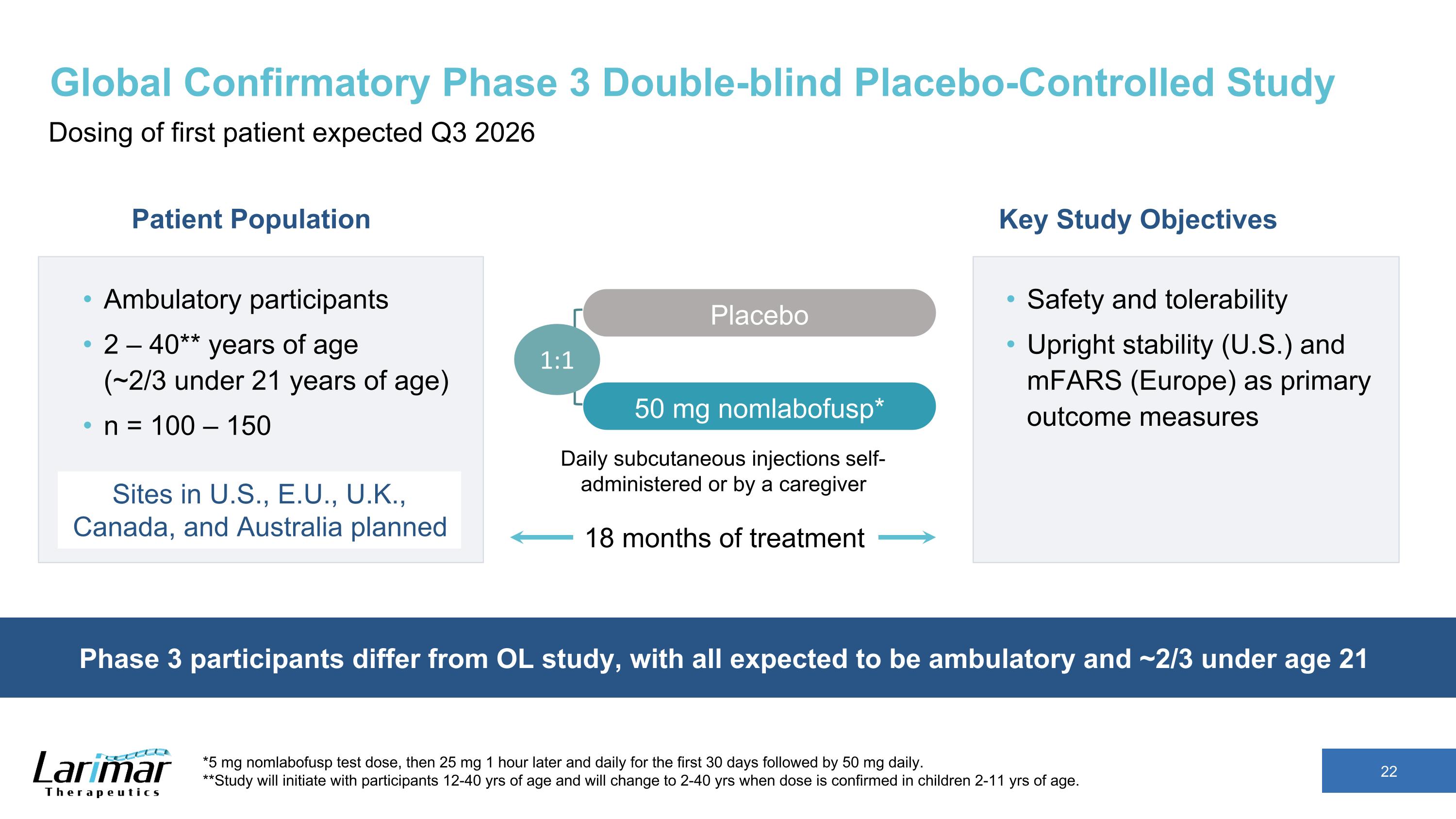
Global Confirmatory Phase 3 Double-blind Placebo-Controlled Study Dosing of first patient expected Q3 2026 18 months of treatment Ambulatory participants 2 – 40** years of age �(~2/3 under 21 years of age) n = 100 – 150 Key Study Objectives Safety and tolerability Upright stability (U.S.) and mFARS (Europe) as primary outcome measures Daily subcutaneous injections self-administered or by a caregiver Placebo 50 mg nomlabofusp* Patient Population *5 mg nomlabofusp test dose, then 25 mg 1 hour later and daily for the first 30 days followed by 50 mg daily. **Study will initiate with participants 12-40 yrs of age and will change to 2-40 yrs when dose is confirmed in children 2-11 yrs of age. 1:1 Phase 3 participants differ from OL study, with all expected to be ambulatory and ~2/3 under age 21 Sites in U.S., E.U., U.K., Canada, and Australia planned
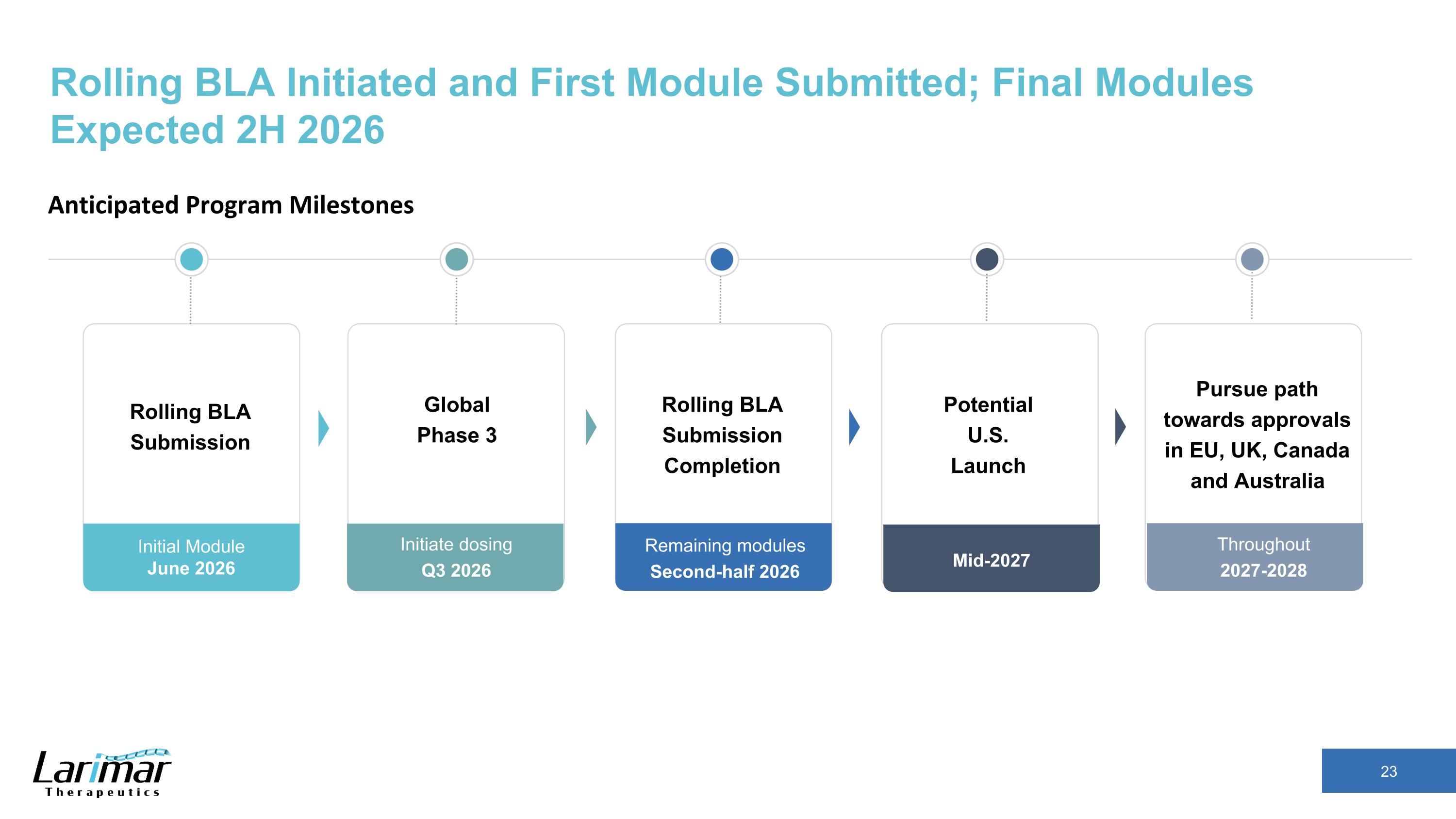
Rolling BLA Initiated and First Module Submitted; Final Modules Expected 2H 2026 Rolling BLA �Submission Global �Phase 3 Rolling BLA �Submission Completion Potential U.S. Launch Pursue path towards approvals in EU, UK, Canada and Australia Initial Module June 2026 Initiate dosing Q3 2026 Remaining modules Second-half 2026 Mid-2027 Throughout 2027-2028 Anticipated Program Milestones
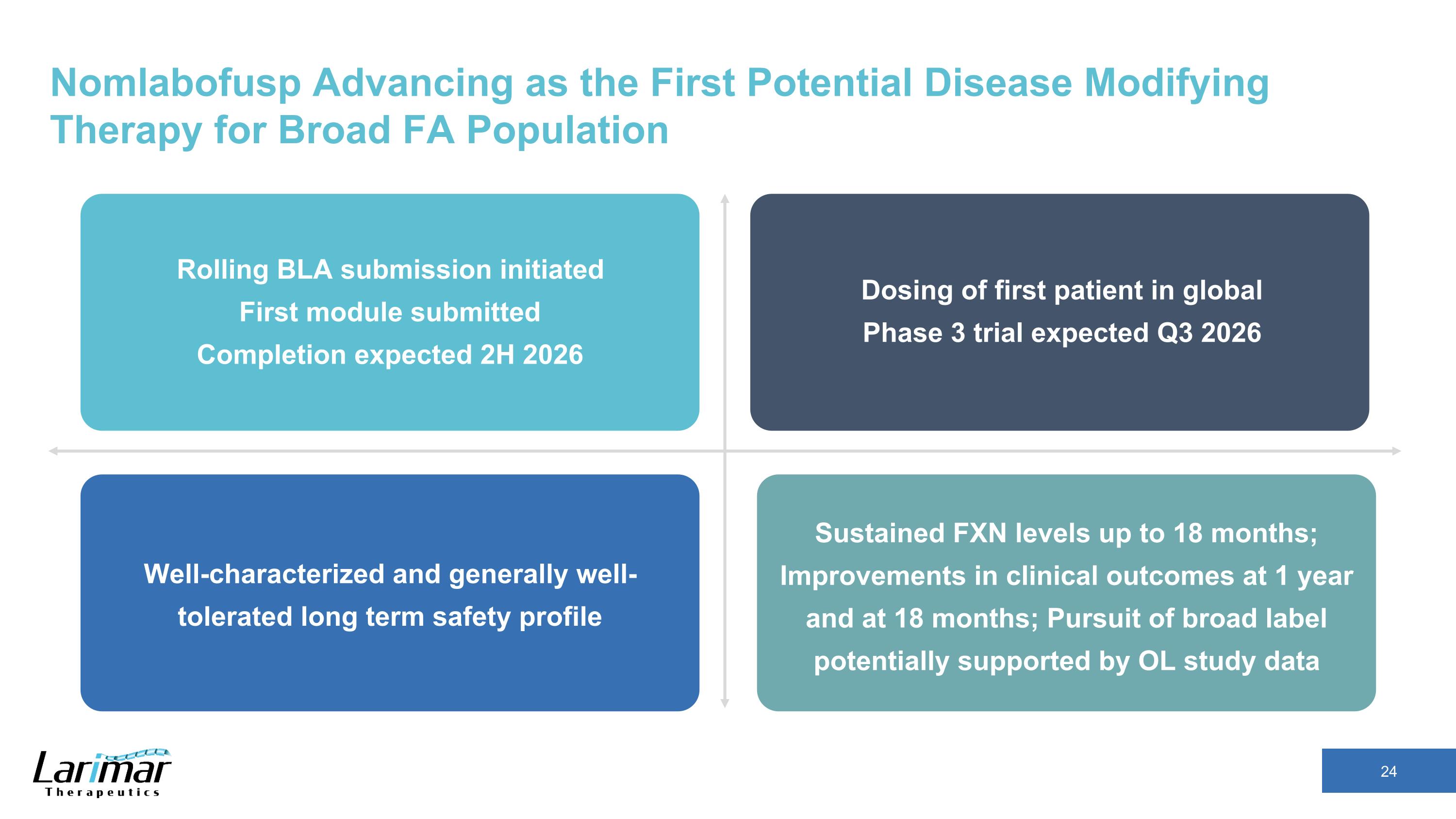
Nomlabofusp Advancing as the First Potential Disease Modifying Therapy for Broad FA Population Rolling BLA submission initiated �First module submitted�Completion expected 2H 2026 Dosing of first patient in global �Phase 3 trial expected Q3 2026 Sustained FXN levels up to 18 months;�Improvements in clinical outcomes at 1 year and at 18 months; Pursuit of broad label potentially supported by OL study data Well-characterized and generally well-tolerated long term safety profile
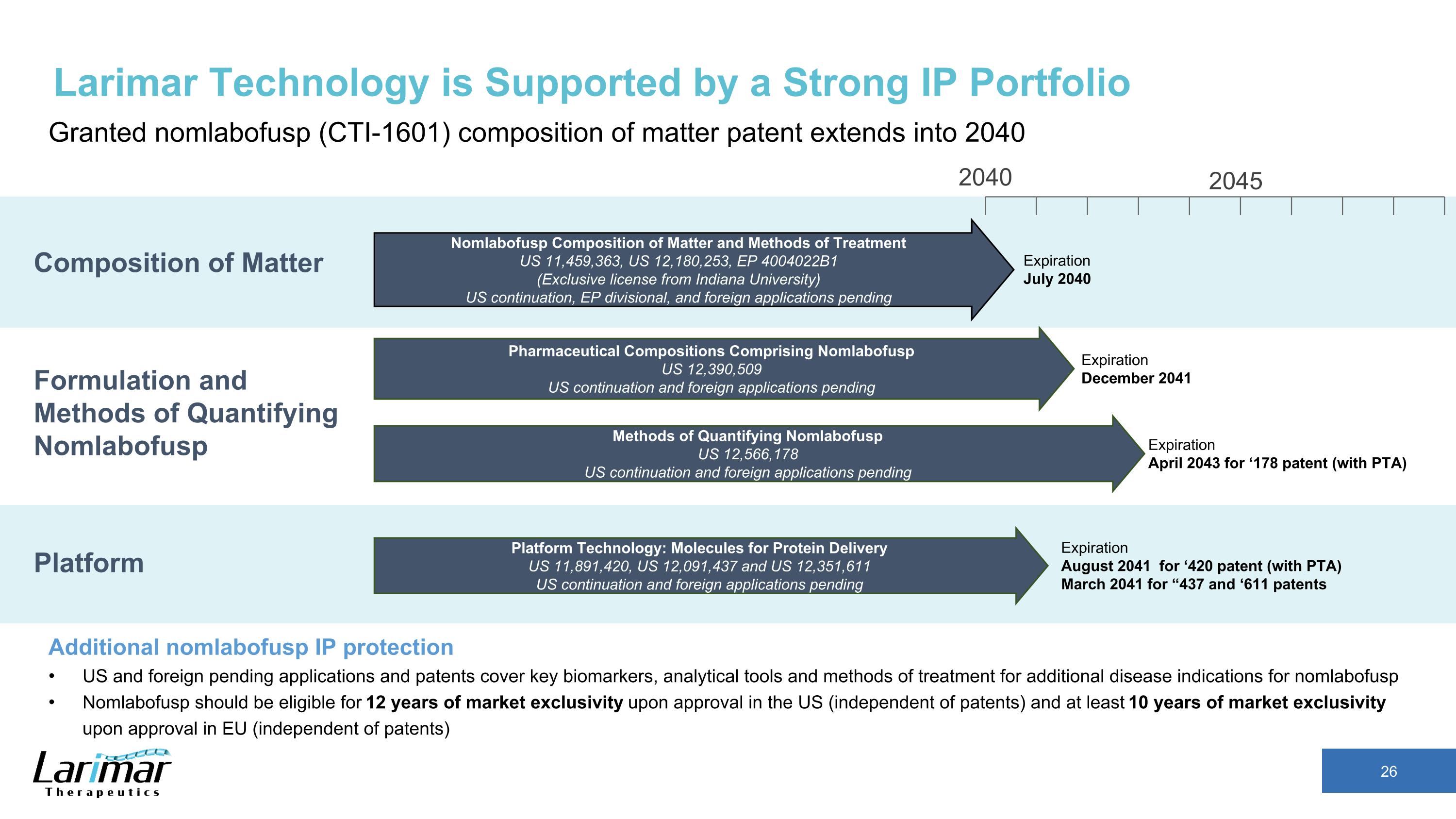
Appendix
2040 Nomlabofusp Composition of Matter and Methods of Treatment US 11,459,363, US 12,180,253, EP 4004022B1 (Exclusive license from Indiana University) US continuation, EP divisional, and foreign applications pending Expiration July 2040 Composition of Matter Larimar Technology is Supported by a Strong IP Portfolio Granted nomlabofusp (CTI-1601) composition of matter patent extends into 2040 Additional nomlabofusp IP protection US and foreign pending applications and patents cover key biomarkers, analytical tools and methods of treatment for additional disease indications for nomlabofusp Nomlabofusp should be eligible for 12 years of market exclusivity upon approval in the US (independent of patents) and at least 10 years of market exclusivity upon approval in EU (independent of patents) Platform Formulation and Methods of Quantifying Nomlabofusp Platform Technology: Molecules for Protein Delivery US 11,891,420, US 12,091,437 and US 12,351,611 US continuation and foreign applications pending Pharmaceutical Compositions Comprising Nomlabofusp US 12,390,509 US continuation and foreign applications pending Methods of Quantifying Nomlabofusp US 12,566,178 US continuation and foreign applications pending Expiration December 2041 Expiration April 2043 for ‘178 patent (with PTA) Expiration August 2041 for ‘420 patent (with PTA) March 2041 for “437 and ‘611 patents 2045